Why you should find your valves today
When a pipe bursts or a hose splits, the first job is always the same: stop the water. Mopping up and calling a plumber come after. It is the first of four start-here pages in our home plumbing guide for Kuala Lumpur homes.
Knowing how to turn off the main water supply saves more damage than any other single skill. If the leak is already happening, close the valve first and read the Pipe Leaks section afterwards.
Here’s what we cover:
- The stopcock near the meter in a landed house
- The tank outlet valve for houses with a roof tank
- The unit valve in a condo, and why the building’s valves are off limits
Spend five minutes finding your valves on a calm day. In a real leak, you won’t want to be searching with a torch in the rain.
Landed house: the stopcock near the meter
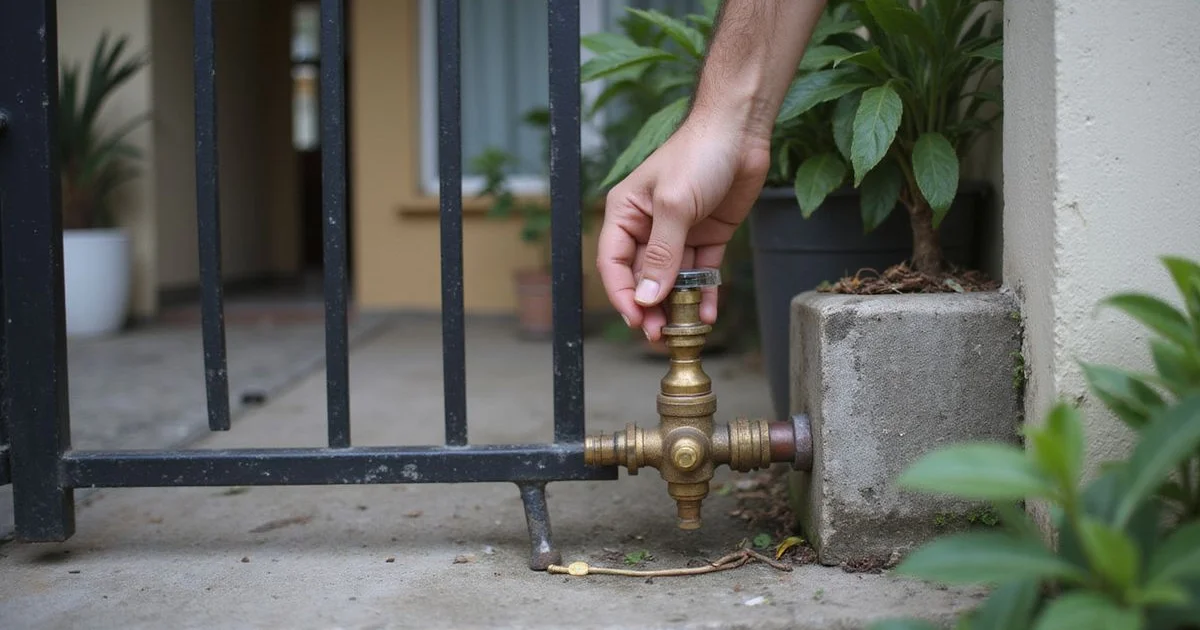
Close the stopcock, which is the valve on your side of the water meter. Most landed houses in Kuala Lumpur and Selangor have the meter near the front gate or boundary wall, so the stopcock location in Malaysian homes is usually easy to spot once you know where to look.
- Find the meter. Look for a small concrete or metal box at ground level near the gate, or a meter fixed to the front wall.
- Find the valve after the meter. It is usually a brass valve with a round wheel, a small lever or a slot head.
- Turn it clockwise until it stops. A wheel valve may need several turns. A lever valve is closed when the lever sits across the pipe.
- Check that it worked. Open a tap on the ground floor that is fed straight from the mains, often the kitchen tap. The flow should slow to nothing.
If the valve is stiff, use steady pressure rather than force. Old brass valves can snap at the spindle.
If it will not move, leave it and plan to have it replaced. A seized valve is no use in an emergency, and valves that never get turned are the ones that seize. Closing and reopening yours once or twice a year keeps it free.
What not to touch
Air Selangor is responsible for the pipe up to the customer’s meter. Pipes after the meter are the owner’s. Do not open, adjust or tamper with the meter or any valve on the road side of it. If water is leaking on the supply side, report it to Air Selangor on 15300.
This split comes from the Water Services Industry Act 2006. It also means a leak after your meter is yours to fix, and your bill pays for the water it wastes.
Landed house with a roof tank: close the tank outlet too
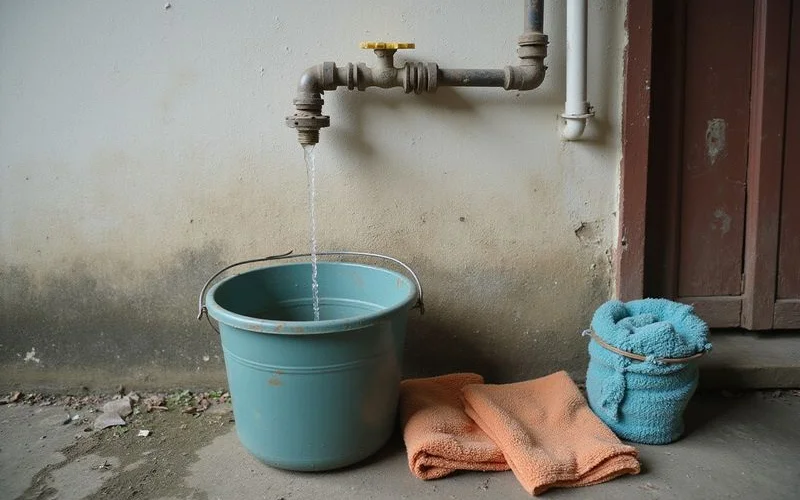
Close the tank outlet valve as well as the stopcock. Many landed houses store water in a roof tank, and the upstairs taps, showers and often the water heater run from that tank by gravity. Closing the stopcock stops the tank refilling, but the water already inside keeps flowing to the leak.
To stop it:
- Find the tank outlet valve. It is on the pipe that leaves the bottom or side of the tank, in the roof space or on a stand.
- Close it in the same way, clockwise until it stops.
- If you cannot reach the tank safely, open the lowest tap fed by the tank, such as a bathtub or shower, to drain the stored water away from the leak.
Only go into the roof space if there is safe access and boards to stand on. Ceiling boards will not hold your weight.
A full tank holds a lot of water, so a leak fed from it can run for a long time after the stopcock is shut. That’s why we treat the tank outlet as the second valve everyone should know.
Condo unit: your unit valve, not the building’s
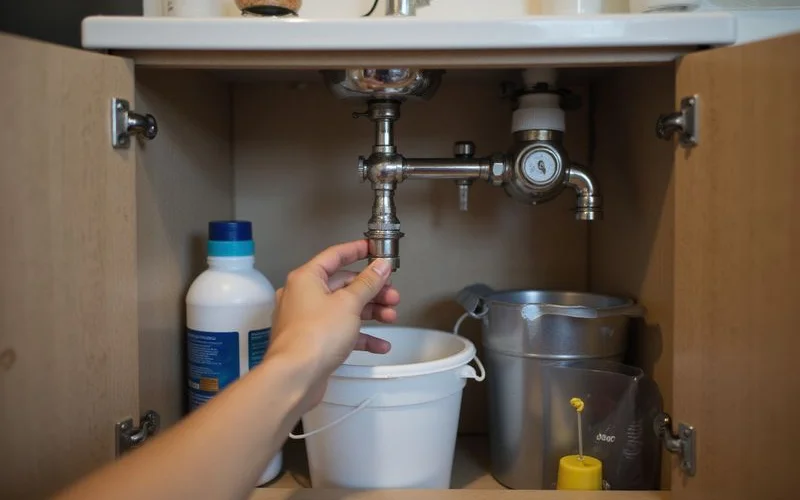
Close your own unit valve and leave the building’s valves alone. In a condo or apartment, building management looks after the shared tanks, risers and main pipes. You look after the pipes inside your unit, and that split applies to valves too.
- Your unit valve is usually near your unit meter in the corridor riser cupboard, under the kitchen sink, or in the service yard near the washing machine point.
- Building valves control a whole floor or stack. Do not close them yourself. Call the management office or guard house and tell them which unit and where the water is coming from.
| Valve | Who closes it | Where to look |
|---|---|---|
| Condo unit water valve | You | Riser cupboard, under the sink, service yard |
| Floor or stack valve | Building management | Riser room or common area |
| Tank outlet valve (landed) | You | Roof space or tank stand |
If water is coming through your ceiling from the unit above, closing your own valve will not help. Tell building management straight away so they can reach the unit above. The Condo and Strata Leaks section explains what happens next.
After the water is off
Make the area safe first, then deal with the damage. Work through these steps in order:
- Switch off power to wet areas at the board if water is near sockets, a water heater or appliances, and only if you can reach the board without standing in water.
- Switch off the booster pump and water heater so they do not run dry.
- Open a low tap to drain pressure from the pipes.
- Take photos of the leak and any damage. They help a plumber and, in a condo, building management.
Photos also help if you need to explain the damage to an insurer later.
If you are not sure how serious the problem is, read Plumbing Problem: Is It Urgent or Can It Wait? before you decide your next step.
When to call a plumber
Call a plumber if the stopcock is seized, leaks around its spindle, or will not shut the water off fully. Call one too if the leak is on a concealed pipe or you cannot find where the water is coming from.
Work on pipes and fittings that carry water from the public mains needs a plumber with an IPA Type A permit from SPAN, so ask about it before work starts. Under the Water Services Industry (Permit) Rules 2007, that permit covers building, connecting, changing or repairing those pipes and fittings.
Once the water is off, you have time to get the repair done properly. Before the next leak, walk out to your meter today, find the stopcock and close it once to check it moves. Then save 15300 in your phone, so you have Air Selangor’s number if the problem is on the supply side.