What causes blocked drains and sinks?
The cause depends on where the drain is.
| Location | Usual cause |
|---|---|
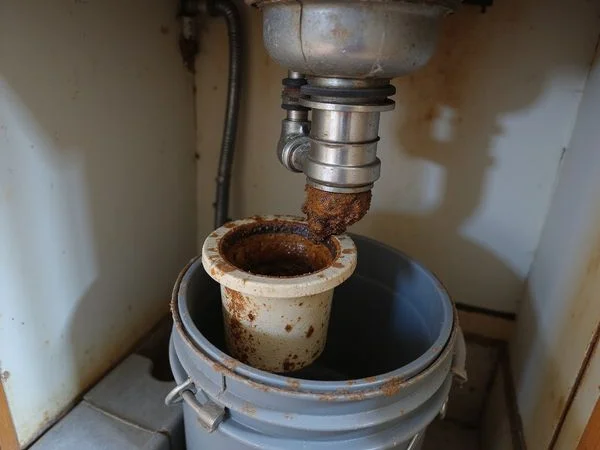
| Kitchen sink | Cooking oil and grease, food scraps, rice |
| Bathroom basin | Hair, soap scum, toothpaste |
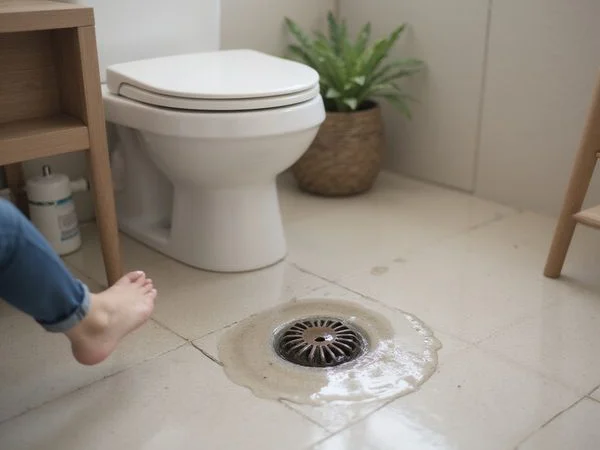
| Shower and floor trap | Hair, soap, sand, debris |
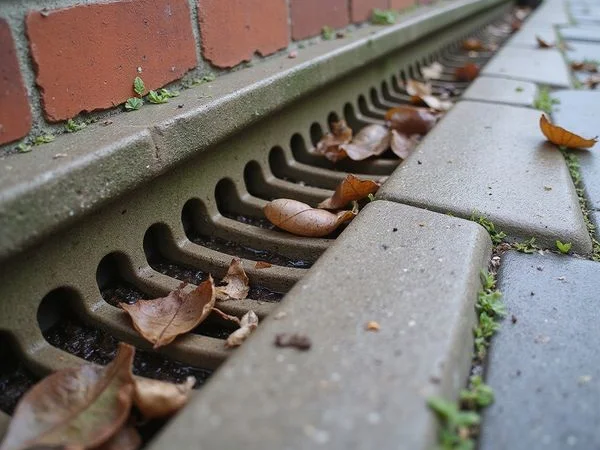
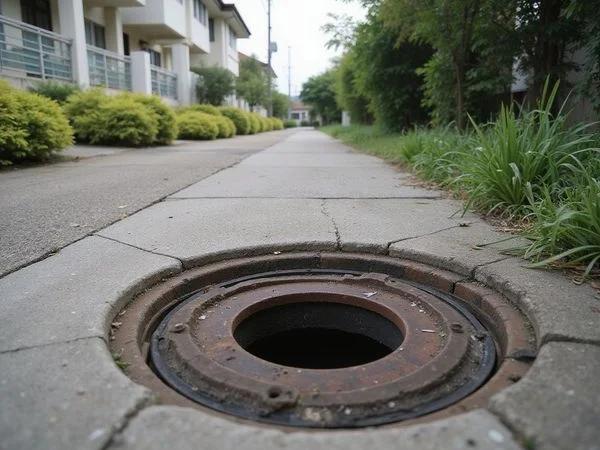
| Outdoor drain | Leaves, silt and rubbish after heavy rain |
| Main house drain | Build-up from all of the above, roots, sagging pipe |
| Condo stack | Waste from several units, wipes and grease |
Grease is the biggest single cause in Malaysian kitchens. It goes down hot and liquid, then cools and sets inside the P-trap or bottle trap and the pipe beyond, catching everything else. Kitchen grease is one of many everyday causes covered across our home plumbing guide for Kuala Lumpur.
What will you notice?
- The kitchen sink drains slowly
- Water backs up into the sink, shower or floor trap
- A gurgling sound when water drains, covered in our guide to gurgling drains
- A bad smell from a floor trap, explained in bad smell from a drain or floor trap
- An outdoor drain overflowing after rain
What can you safely check yourself?
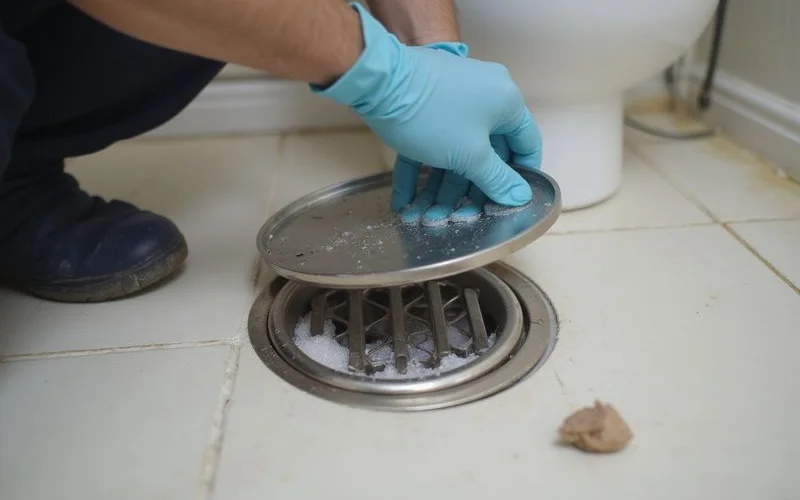
- Clean the trap. Lift the floor trap grating and clear hair and debris with gloves. Under a sink, undo the bottle trap over a pail and clean it.
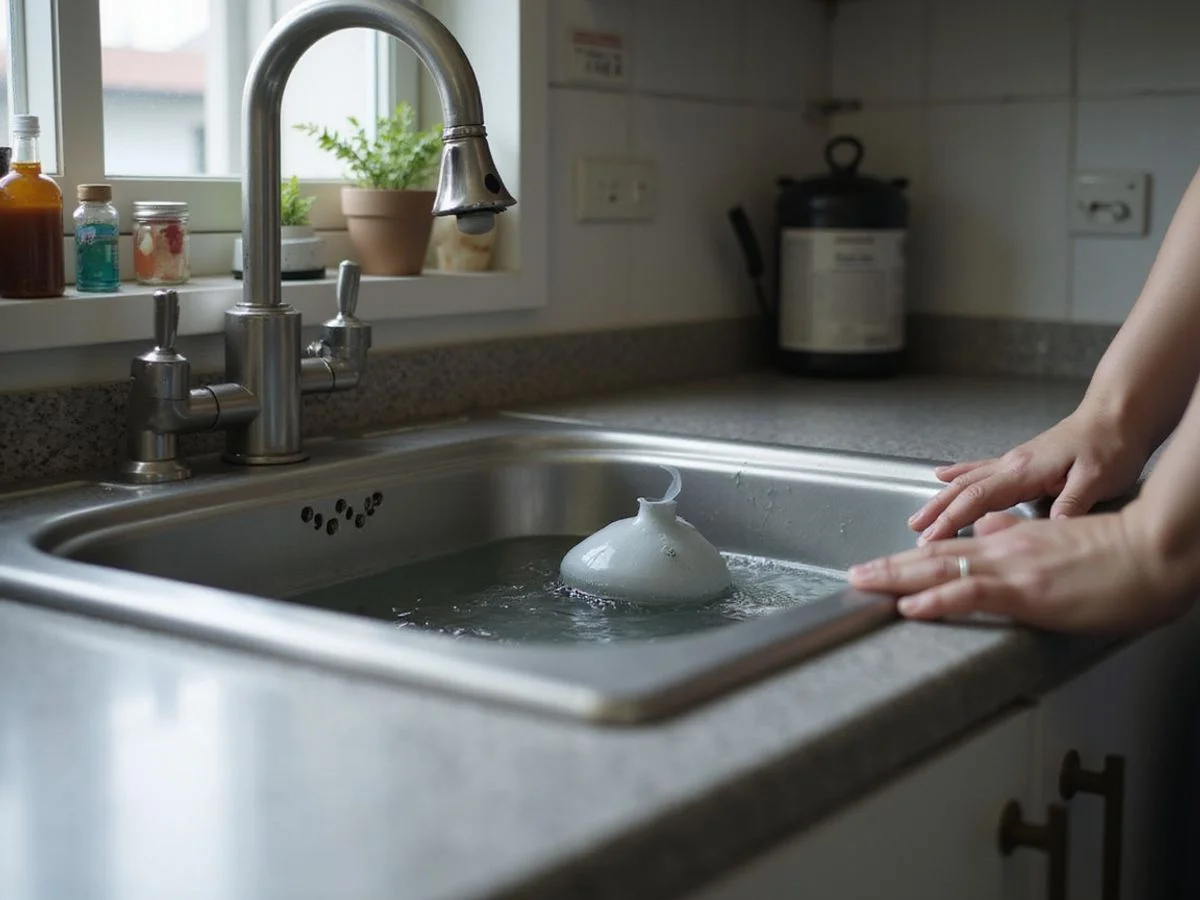
- Use a plunger. Cover the overflow hole with a wet cloth, make a seal, and work the plunger firmly 15 to 20 times.
- Try a hand drain snake on hair blockages in basins and showers.
- Pour hot, not boiling, water after clearing grease.
- Check outdoor drains and inspection chambers in a landed house, once the rain has stopped.
Avoid caustic soda and other strong chemicals. Our comparison of drain chemicals, plungers, drain snakes and hydro jetting explains which method suits which blockage.
Landed house
Drains inside your boundary, including inspection chambers, are usually the owner’s responsibility. The public sewer is handled by Indah Water Konsortium (IWK). Older houses may have a septic tank instead. If outdoor drains overflow in rain, read outdoor drain overflowing after rain.
Condo unit
Your sinks, traps and branch pipes are yours. The vertical stack, its vent stack and the main drains are common property. If water rises through your floor trap when the unit above uses water, the shared stack is blocked. Tell building management straight away. Our guide on water coming up from the floor trap explains how to tell your pipe from a shared line.
What does a repair involve?
- Near the opening: clearing the trap, plunging or snaking. Usually quick.
- Further down the line: a powered snake, or removing a trap or section of pipe.
- Long lines packed with grease or silt: hydro jetting by a drainage specialist. The partner plumber does not offer hydro jetting.
- Damaged or sagging pipe: replacing a section, sometimes under the floor.
- Missing trap or collar: fitting a proper floor trap so the water seal works.
To stop it happening again, read how to stop drains blocking again.
When should you call a plumber?
Call a plumber if a plunger and cleaning the trap do not work, if more than one fixture is slow or backing up, if water rises through a floor trap, or if blockages keep returning. For shared stacks in condos, call building management first. For the public sewer, contact IWK. Ask how the plumber plans to clear the blockage, and agree the price before they start.