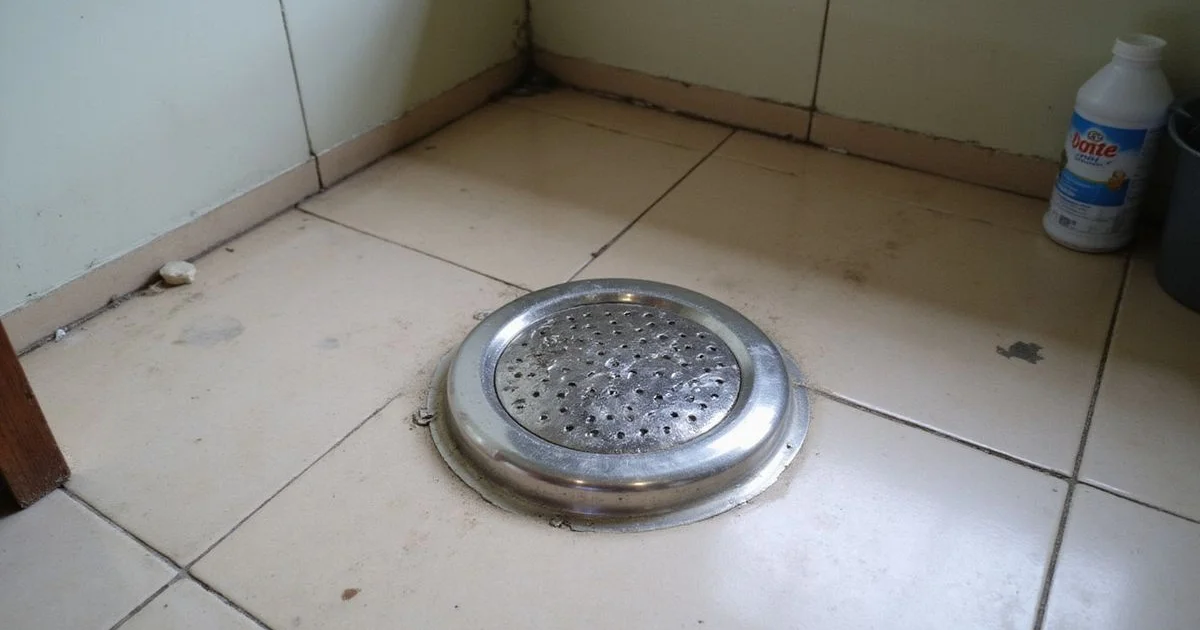
Where drain smells come from
A smelly floor trap is unpleasant, and it’s also a clue. Drains are built so sewer gas never reaches your home.
Each floor trap, sink trap and toilet holds a small pool of water called a water seal. That pool blocks the gas. Drainage standards such as BS EN 1253 for floor drains call for a seal at least 50 mm deep, and a shallower one dries out faster.
When you smell sewage, something has broken that seal or let gas around it. We’d take it seriously. The US state of Wisconsin’s health department notes that sewer gas contains hydrogen sulfide, which smells like rotten eggs and can dull your sense of smell the longer you’re exposed.
This guide covers the five common causes of a drain smell in the bathroom, then gives you simple checks in the right order. It’s part of the Blocked Drains and Sinks section.
Cause 1: a dry water seal
A dry seal is the most common cause and the easiest to fix. Floor traps in rooms you rarely use, such as a guest bathroom, a balcony or a service yard, slowly lose their water to evaporation. Once the seal is gone, gas comes straight up.
Signs:
- The smell is in a room that isn’t used often.
- It fades after the room is used.
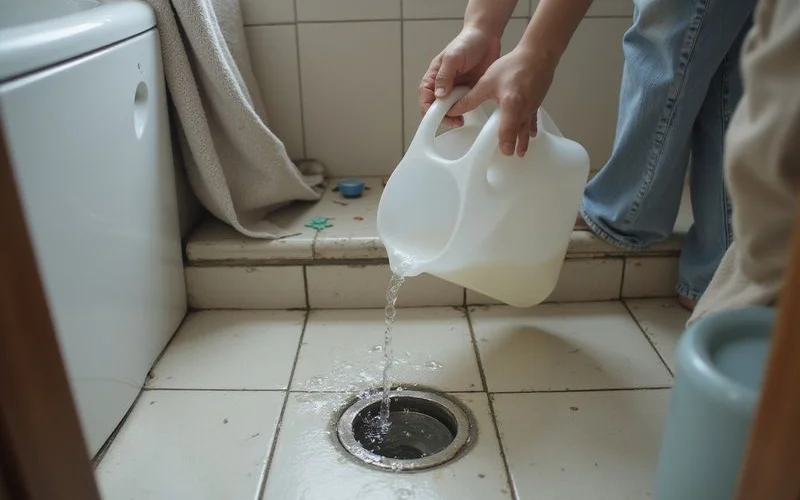
Fix: pour a jug of water into each floor trap. If a bathroom stays unused, do this every week or two. A small splash of cooking oil on top of the water slows evaporation when you’re away.
Cause 2: a missing trap or collar
Some floor traps in older houses, or ones changed during a renovation, have no proper trap body. Others lack the rubber collar that seals the pipe into it. Without them, there’s either no water seal at all or gas leaks around the edge.
Signs:
- The smell is constant, even after you pour water in.
- When you lift the grating, you see a straight pipe with no trap below, or a gap around the pipe.
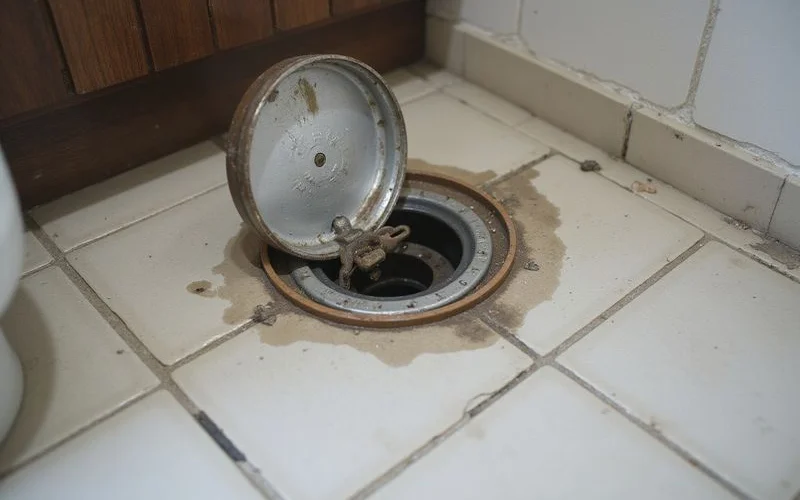
Fix: a plumber can fit a proper trap or a replacement collar. On a tiled floor, this may mean removing the trap body and a few tiles around it. Ask for the tile work to be quoted up front, because it’s often the bigger part of the job.
Cause 3: venting problems
Drain pipes need air. A vent pipe lets air in so water can flow smoothly. If the vent is blocked, or there isn’t one, water rushing down the pipe can pull the water out of nearby traps. Then gas comes up.
Signs:
- Gurgling from a floor trap or basin when the toilet flushes or a nearby sink drains.
- Smells that come and go with water use.
Our guide on gurgling drains explains this in more detail.
Fix: this needs a plumber to look at the pipework. In a condo, if several units have the same problem, the shared stack may be the cause. That’s building management’s responsibility.
Cause 4: the toilet seal
The toilet outlet connects to the floor pipe with a seal. If the seal fails, or the toilet has shifted on its base, sewer gas can escape around it. You may also see water or staining at the base.
Signs:
- The smell is strongest right beside the toilet.
- The toilet rocks slightly when you sit on it.
Our guide on water leaking at the base of the toilet covers the checks. Don’t keep tightening the bolts to stop the rocking. Over-tightening can crack the porcelain, so leave a loose pan to the plumber.
Cause 5: dirt in the trap itself
Hair, soap and sludge build up in floor traps and sink traps. That build-up starts to smell on its own, even when the seal is intact.
Fix: lift the floor trap grating and remove the hair and debris with gloves. Scrub the trap, then pour hot water down it. Use hot, not boiling, water, since boiling water can soften PVC fittings.
Simple checks in order
Work through these before you call anyone:
- Find where the smell is strongest. Is it the floor trap, basin, toilet, or the room in general?
- Top up every floor trap in that room with a jug of water. Wait a day.
- Clean the trap. Lift the cover, clear hair and sludge, then flush with water.
- Check the toilet base. Does it rock? Is there damp or staining?
- Listen for gurgling when other fixtures drain.
- Ask the neighbours in a condo. If others have the smell too, report it to building management.
| What you notice | Likely cause | Who fixes it |
|---|---|---|
| Smell in unused room, gone after water poured in | Dry seal | You |
| Constant smell, no trap under the grating | Missing trap or collar | Plumber |
| Smell with gurgling | Venting problem | Plumber, or building management for shared stacks |
| Smell at the toilet base, toilet rocks | Failed toilet seal | Plumber |
| Smell from a dirty trap | Build-up | You |
Landed house and condo notes
Landed house. If the smell comes from outside, check the manhole or inspection chamber covers around the house. A cracked or loose cover can let gas out. Smells from the public sewer connection may need Indah Water Konsortium (IWK), which handles the public sewerage system.
Condo unit. Pipes inside your unit are yours, but the vertical stack serving several floors is shared. If smells come from several units, or from the corridor, report it to building management.
When to call a plumber
Call a plumber if any of these apply:
- The smell stays after you’ve topped up and cleaned the traps.
- There’s no trap under a floor grating.
- You hear gurgling along with the smell.
- The toilet base is loose or damp.
These need a look at the pipework, not more cleaning products. If your sewer smell in the bathroom still won’t go after the simple checks, we’d book a plumber rather than wait. Take a photo of the open floor trap first, since it helps the plumber quote more accurately.