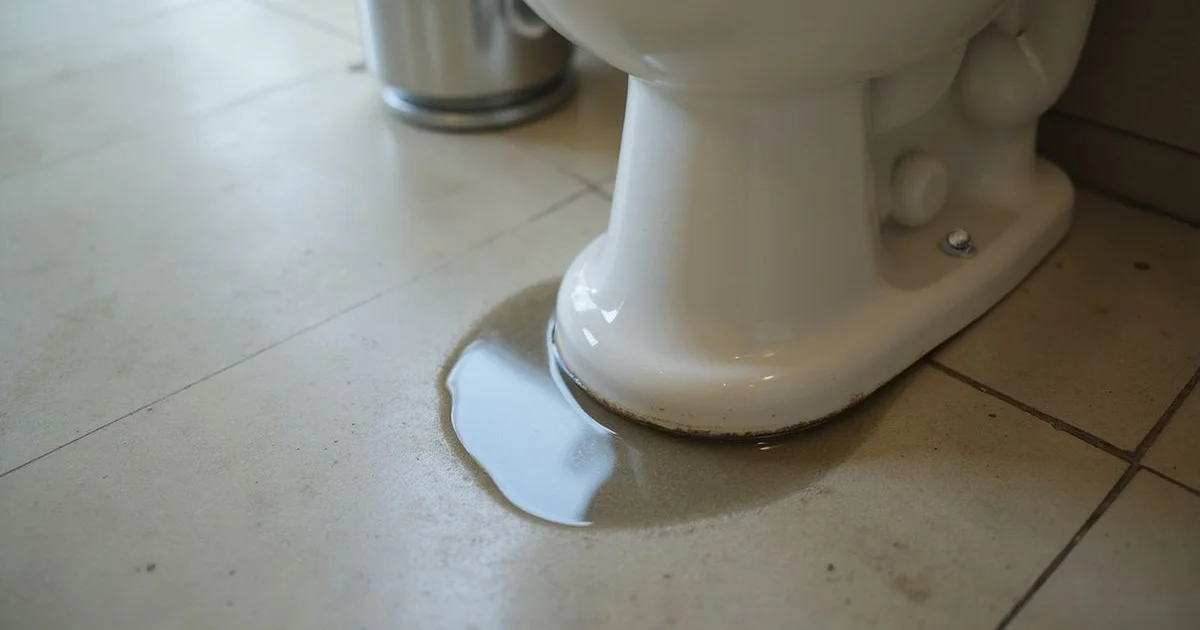
Where the water might be coming from
Water on the floor around a toilet is worth checking straight away. It might be harmless condensation. It might be a dripping hose. Or it might be a failed seal that lets dirty water soak into the floor every time you flush. The source decides how serious it is and who should fix it. This guide shows you how to find it. For other toilet faults, see the Toilet Problems section.
The four usual sources
| Source | What you see | How serious |
|---|---|---|
| Condensation on the cistern | Droplets on the outside of the cistern, mainly on humid days | Low |
| Supply hose or angle valve | Drips from the hose or valve behind the toilet, all the time | Medium |
| Cistern to bowl joint | Water appears after a flush at the back of the bowl | Medium |
| Base seal | Water seeps out around the base after flushing, sometimes with a smell | High |
| Cracked bowl or cistern | A visible crack, water appears near it | High |
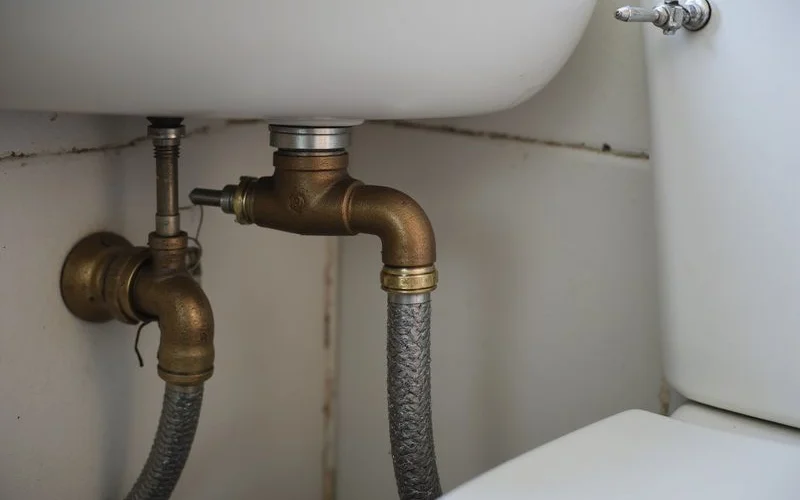
Test 1: the dry tissue test
- Dry the floor and the whole toilet thoroughly with a towel.
- Wait 15 minutes without using the toilet.
- Press dry tissue against the supply hose, the angle valve, the joint between cistern and bowl, and the base all the way round.
- Note where the tissue gets wet.
If water appears without flushing, it is coming from the supply side: the hose, the valve, or the cistern itself.
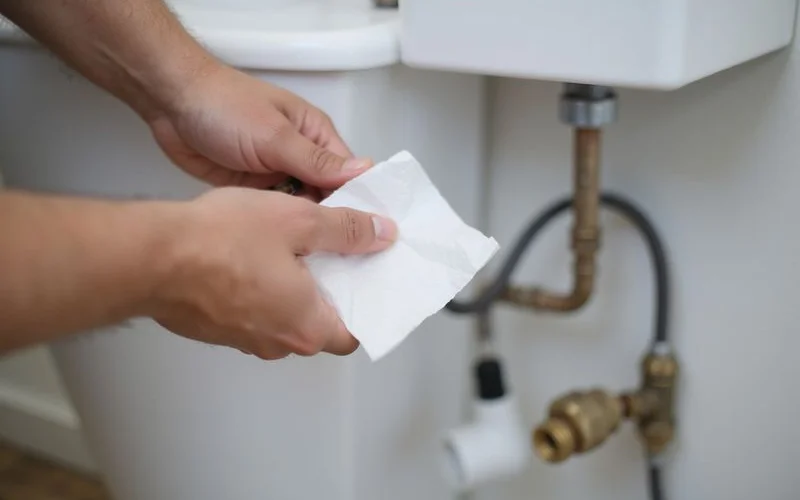
Test 2: flush and watch
- Dry everything again.
- Flush once.
- Watch the base and the back of the bowl closely for a minute.
If water appears at the base only after flushing, the base seal or the outlet connection is the likely cause. If it appears at the back of the bowl where the cistern meets it, the cistern to bowl seal is worn.
Test 3: the dye test
Put a few drops of food colouring in the cistern. If coloured water appears on the floor without flushing, the cistern itself or its joint with the bowl is leaking. If coloured water shows up in the bowl without flushing, the flush valve is leaking, which wastes water but is not a floor leak. Our guide on a toilet cistern running non-stop covers that.
Condensation: how to tell
In humid weather, especially in bathrooms without good ventilation, cold water in the cistern makes moisture condense on the outside. It runs down and drips onto the floor. It is clean water and does not mean a leak.
Signs it is condensation:
- Droplets cover the outside of the cistern evenly
- It happens on humid days and after hot showers
- The floor stays dry when the weather is dry or the bathroom is ventilated
Opening a window or running an exhaust fan usually helps.
Condo risk: the unit below
A leak at the base of a toilet in a condo does not stay in your bathroom. The water seeps into the floor screed, and from there into the ceiling of the unit below. Your neighbour may notice it before you do.
If you find a base leak in a condo:
- Stop using that toilet until it is fixed.
- Tell building management if your neighbour reports damp.
- Keep photos and the plumber’s findings. If there is a dispute, building management may inspect under the Form 28 process. The Condo and Strata Leaks section explains how that works.
When to stop using it
Stop using the toilet if:
- Water appears at the base after flushing
- You can see a crack in the bowl or cistern
- The toilet rocks on its base
- There is a sewer smell near the base
For a dripping hose or valve, close the angle valve and use the toilet by pouring a pail of water into the bowl until it is repaired.
What the repair usually involves
- Supply hose or angle valve: replace the hose or valve. A quick job.
- Cistern to bowl seal: remove the cistern, fit a new seal and bolts.
- Base seal: lift the toilet, clean off the old seal, fit a new one, and reseat the toilet. If the floor outlet or flange is damaged, that needs repair too.
- Cracked bowl or cistern: replacement. Read Repair or Replace a Toilet? to decide.
When to call a plumber
Call a plumber for a leaking base seal, a cistern to bowl leak, a cracked bowl, or any leak that might be reaching the unit below. Tell them what your tests showed. If the toilet needs to come up, ask whether the quote includes a new seal, resealing the base and checking the floor outlet.