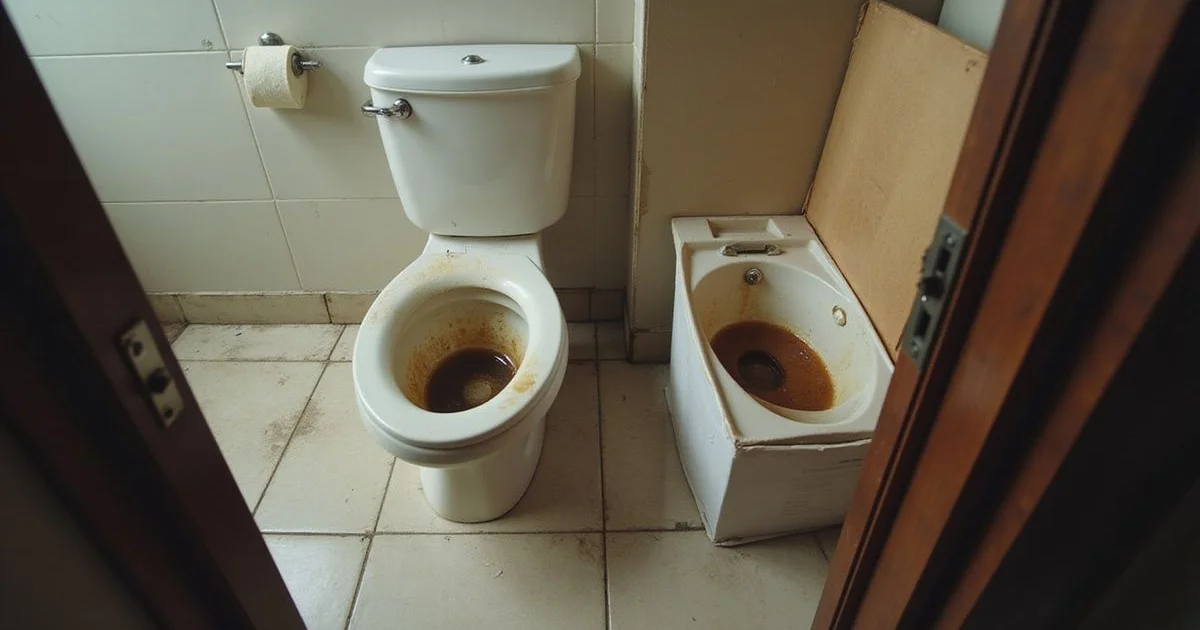
Most toilet faults are repairable
Most of the time, repairing wins. The parts that wear out sit inside the cistern, and they’re made to be swapped.
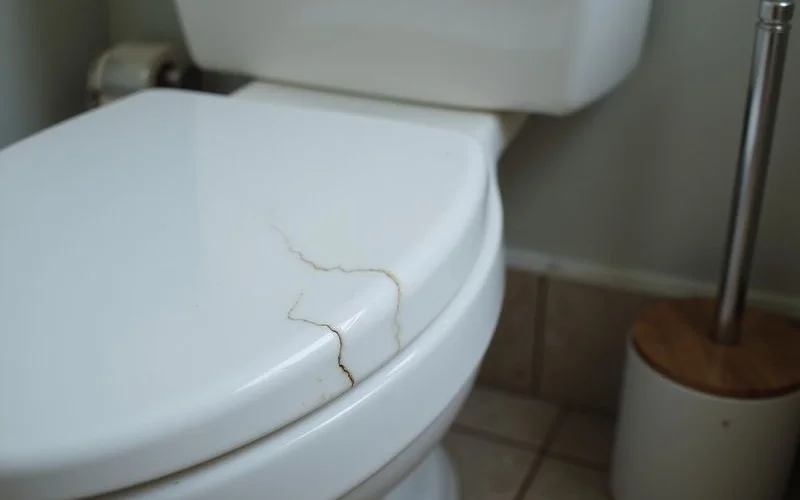
A cracked bowl is the main exception. That means the toilet has reached the end of its life.
If you’re stuck on whether to repair or replace a toilet, we’ll go through the warning signs, the costs and a quick decision table. For individual faults, see the Toilet Problems section.
Repairable parts
A plumber can usually fix or replace these without changing the toilet:
- Fill valve: controls the water coming into the cistern.
- Flush valve and its seal: releases water into the bowl.
- Flush button or lever mechanism.
- Cistern to bowl seal and bolts.
- Base seal between the toilet outlet and the floor pipe.
- Supply hose and angle valve.
The toilet seat is also a simple swap. Many landed house owners put off these small jobs until a leak or a running cistern forces the issue.
If the bowl and cistern are sound, replacing these parts restores the toilet to good working order.
Signs it is time to replace
Replace the toilet when the porcelain itself is damaged or the parts can’t be found. These are the signs we look for:
- A crack in the bowl or cistern, especially below the water line.
- Repeated blockages that keep coming back with a sound pipe, which can point to a bowl with a poor internal shape.
- Parts no longer available for an old or unusual model.
- Very high water use from an old single-flush cistern.
- Stains and wear that won’t clean, in a bathroom you are renovating anyway.
- A wobbly toilet where the base or the floor fixing is damaged beyond reseating.
A crack below the water line matters most. It can start as a slow seep, then spread and leak onto the floor.
Cost factors
Repairing is almost always cheaper than replacing. As a partner price for reference, KL1 Plumber publishes a price of RM50 to RM390 to repair a toilet flushing system, read from its price list on 15 November 2026. That covers repairs to the parts inside the cistern.
Small parts are cheap too. The price guide on recommend.my puts flapper parts at roughly RM15 to RM30, so the bill is mostly labour.
Replacing a toilet costs more because it includes:
- The new toilet, which varies a lot by brand and type
- Removing and disposing of the old one
- A new base seal and connections
- Possibly floor work if the new outlet position doesn’t match
- Possibly re-tiling around the base
There is no published partner price for a full toilet replacement. Ask for a written quote that lists the toilet, the labour and any floor or tile work separately.
Water use: old cistern versus dual flush
Older cisterns often use more water per flush than modern dual-flush ones. Water saving alone rarely justifies replacing a working toilet, though.
Malaysian standards link water closet pans to nominal full flush volumes of 6, 5 and 4 litres. SPAN, the national water services commission, also runs a voluntary Water Efficient Products Labelling Scheme (WEPLS), introduced in 2016, where more stars mean less water per flush. If you do replace, check for that label.
If your toilet is old and flushed many times a day in a busy household, the saving adds up over the years. Our Household Water Use Estimator lets you compare toilet types.
Treat water saving as a tiebreaker. It tips the balance when the toilet also needs major repairs.
Decision ledger
This table covers the situations we see most often:
| Situation | Repair or replace? | Why |
|---|---|---|
| Cistern runs or will not refill | Repair | Valves are replaceable parts |
| Weak flush, bowl sound | Repair | Usually the flush valve or water level |
| Leak at the base, toilet sound | Repair | New base seal and reseat |
| Hairline crack in the cistern lid only | Repair | Replace the lid if available |
| Crack in the bowl | Replace | Cracks spread and can leak |
| Crack in the cistern body | Replace cistern or toilet | Cannot be reliably sealed |
| Parts unavailable | Replace | No way to repair |
| Repeated blockages, pipes clear | Consider replacing | Bowl design may be the cause |
| Renovating the bathroom anyway | Consider replacing | Least disruption to do it now |
Questions to ask yourself
Five questions usually settle it. Work through them in order:
- Is the bowl or cistern cracked? If yes, replace.
- How old is the toilet, and has it needed several repairs recently? One repair is normal. Three in a year suggests it is wearing out.
- Can the plumber get the right parts? If not, a repair may not last.
- Does the toilet suit the people using it? An elderly parent may struggle with a squat toilet or a low pedestal.
- Are you renovating the bathroom soon? If so, a short-term repair now and a replacement during the renovation can make sense.
Landed house and condo notes
Landed house. Replacing a toilet is your own decision and arrangement. If the floor outlet is in poor condition, ask the plumber to check it while the old toilet is off.
Condo unit. A failed base seal or cracked bowl can leak into the unit below. If in doubt, stop using the toilet until it is checked, and choose a fix that restores a proper seal to the floor outlet.
Landlords and tenants
In a rental, the owner usually repairs or replaces a toilet that fails through normal wear and tear. Damage caused by misuse, such as a cracked bowl from a heavy object, may fall on the tenant.
The tenancy agreement decides most cases. The Landlords and Tenants section explains the common rules.
Condo note
Replacing a toilet in a condo is usually work inside your unit. Some buildings still have house rules on hacking, noise and contractor hours, so check with building management before booking.
When to call a plumber
Call a plumber when the simple checks haven’t fixed the fault, when you see a crack, or when water leaks at the base. Those three cases are where a repair or replace toilet decision needs a trained eye.
Ask them to tell you plainly whether the toilet is worth repairing. If they suggest replacing it, ask why. Then ask for the replacement and the repair options to be quoted separately, so you can compare.
If you go ahead with a new toilet, read Replacing a Toilet Bowl: What to Expect before you book.