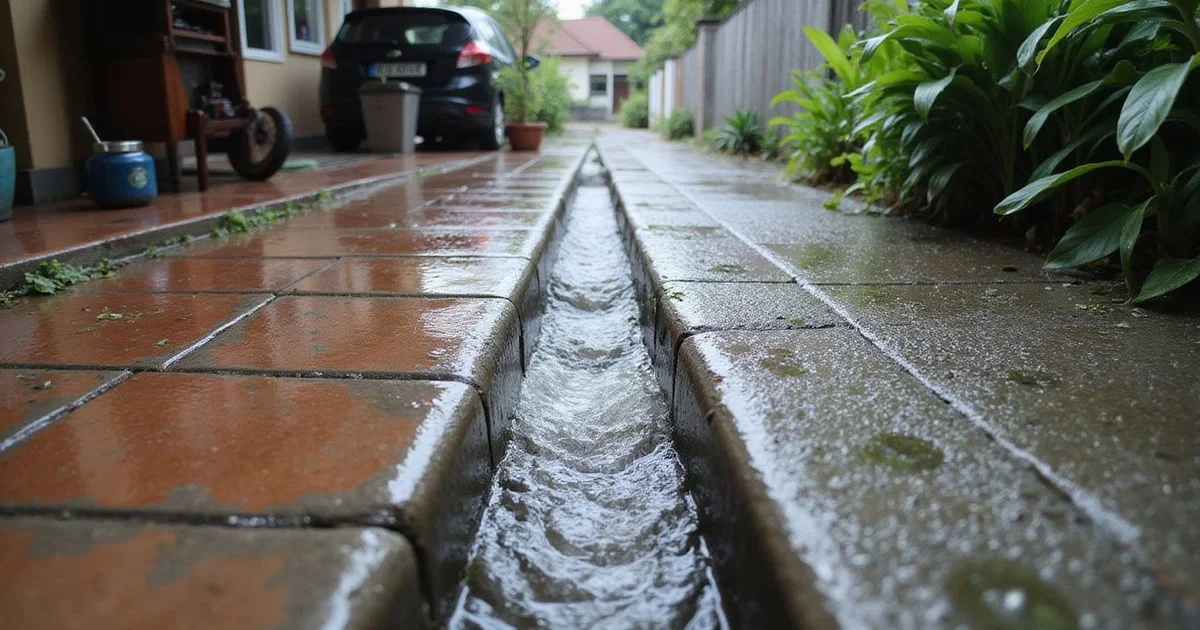
Rain, drains and where the water goes
If your outdoor drain is overflowing after rain, the cause is usually a blockage in your own drain or a full public drain outside your gate. Telling the two apart saves you a lot of effort.
Heavy rain is part of life in the Klang Valley, and the Northeast Monsoon from November to March makes it worse. Early in November 2026, flash floods hit Setapak, Saujana Utama and Puncak Alam. The Star’s coverage of recent Klang Valley floods keeps pointing to the same culprits: silt, rubbish and blocked drains.
Here’s what we cover. We explain who owns which drain, the usual causes of a house drain overflowing in heavy rain, and how to clear what you safely can. We also cover when a blocked monsoon drain is a job for the local council. For blockages inside the house, see the Blocked Drains and Sinks section.
Private drain or public drain?
The owner of the drain is the one who has to clear it. Inside your boundary, that’s you. Outside your gate, it’s usually the council. If dirty water is also rising indoors, read Water Coming Up from the Floor Trap.
| Drain | Typical location | Usually responsible |
|---|---|---|
| Perimeter drain around the house | Inside your boundary, along walls, porch and back yard | Owner |
| Pipes from downpipes and floor traps to the drain | Inside your boundary | Owner |
| Roadside drain or monsoon drain | Outside your gate, along the road | Local council |
| Large monsoon drains and rivers | Public land | Local council or state agencies |
If water backs up from the roadside drain into yours, clearing your own drain won’t help much. The public drain needs attention first.
A quick check is to look at the roadside drain during or just after rain. If it’s brimming or full of silt and rubbish, your drain has nowhere to empty into. Take a photo, because you’ll need it if you report it later.
Common causes of overflow
Most overflows come down to a short list of causes. Silt is the sneaky one. News reports on Klang Valley flooding say silt, garbage and other obstructions can cut a drain’s carrying capacity by as much as 50 per cent, and you often can’t see it until the water has nowhere to go.
- Leaves and debris from trees, especially after windy storms.
- Silt and sand washed in from gardens, construction nearby or unpaved areas. It settles and slowly fills the drain.
- Gutters and downpipes that dump a large volume of roof water into a small drain at one point.
- A blocked downpipe that overflows at its joints instead of carrying water to the drain.
- Grilles and covers clogged with leaves, so water flows over rather than in.
- The public drain is full, so water cannot leave your drain.
- Drain levels that were never quite right, so water collects in low spots.
Older drains are often the weak link. Many were built for far fewer houses than now drain into them, so even a clean drain can struggle in a downpour.
Safe clearing you can do
You can safely clear shallow drains within your boundary, as long as the rain has stopped. Pick a dry spell, ideally before the monsoon starts, and follow these steps:
- Wait for the rain to stop. Never work in a fast-flowing drain.
- Wear gloves and closed shoes. Debris can hide sharp objects.
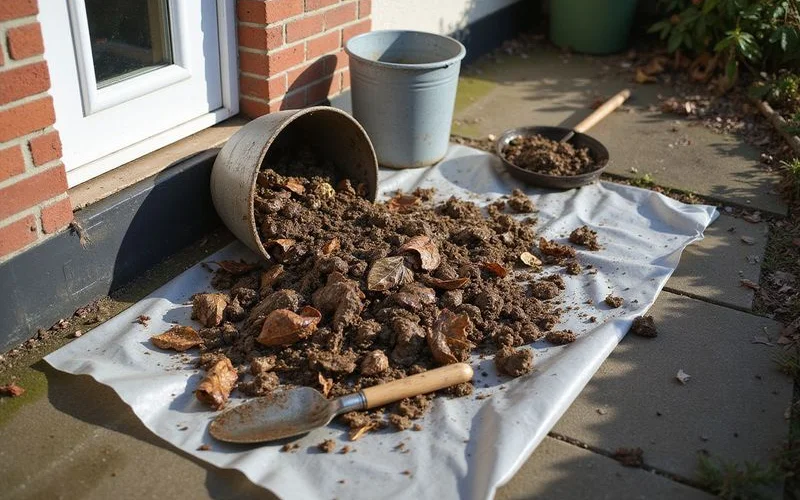
- Lift the grilles and scoop out leaves and silt with a small shovel or scoop. Bag it, do not push it into the public drain.
- Flush with a hose from the highest end down to the outlet, to check water flows freely.
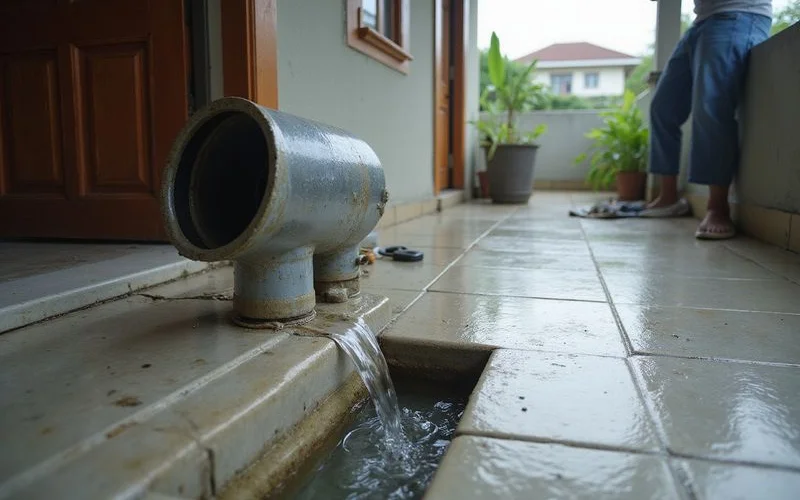
- Check downpipe outlets. Make sure each one empties into the drain, not onto the porch, and that the drain is big enough at that point.
- Clear the gutters if you can reach them safely from the ground or a stable ladder with someone holding it. Do not climb onto the roof.
Bagging the silt matters more than it seems. Anything you push into the public drain ends up in the same system that floods your street.
Stay safe in heavy rain
Fast water in a drain is stronger than it looks. Keep children away from drains during and after storms, and never lift a large drain cover in flowing water.
Your gutters and roof matter too
Many outdoor overflows start on the roof. A gutter full of leaves spills water down the wall instead of into the downpipe.
That water can soak walls, get under the porch tiles and reach the ceiling. Blocked gutters are also one of the most common causes of ceiling stains after rain. A fully choked downpipe turns the whole gutter into a pond that has to spill somewhere.
The Roof Leaks and Waterproofing section covers gutters, downpipes and ceiling stains in more detail.
When to report it to the local council
Report a blocked monsoon drain to your local council (DBKL, MBPJ, MPK or whichever covers your area) if any of these apply:
- The roadside or monsoon drain outside your house is blocked or full of rubbish
- A drain cover or grille on public land is broken or missing
- Water from a public drain floods your property regularly
- Construction nearby has filled drains with silt
Give the address, a landmark, photos and how often it happens. Keep the reference number.
Construction silt is worth naming in your report. MBPJ has said it directs developers to clean, widen and deepen drains and install trash traps at inlets, so a clear complaint about a nearby site gives the council something to act on.
Landed house and condo notes
Landed house. The perimeter drain, downpipes and the pipes connecting to it are yours. Check them before the rain and after storms.
Condo unit. Outdoor drains, roof gutters and the building’s drainage are common property, managed by the JMB or MC. If you see a blocked drain or overflowing gutter in a common area, report it to building management. Your part is usually the balcony drain, which you should keep clear of leaves and dust so rainwater does not pool and seep through.
When to call a plumber
Call a plumber or drainage contractor if any of these happen:
- Your drain stays full after you clear the debris
- Water backs up into floor traps during rain
- A pipe from a downpipe or floor trap is broken
- The drain needs re-levelling
For public drains, report to the council rather than paying for work on land that isn’t yours.
If your house drain still overflows in heavy rain after a clean, take a photo of the water level during the next storm. It helps a plumber, or the council, see whether the problem is your drain or the monsoon drain outside.