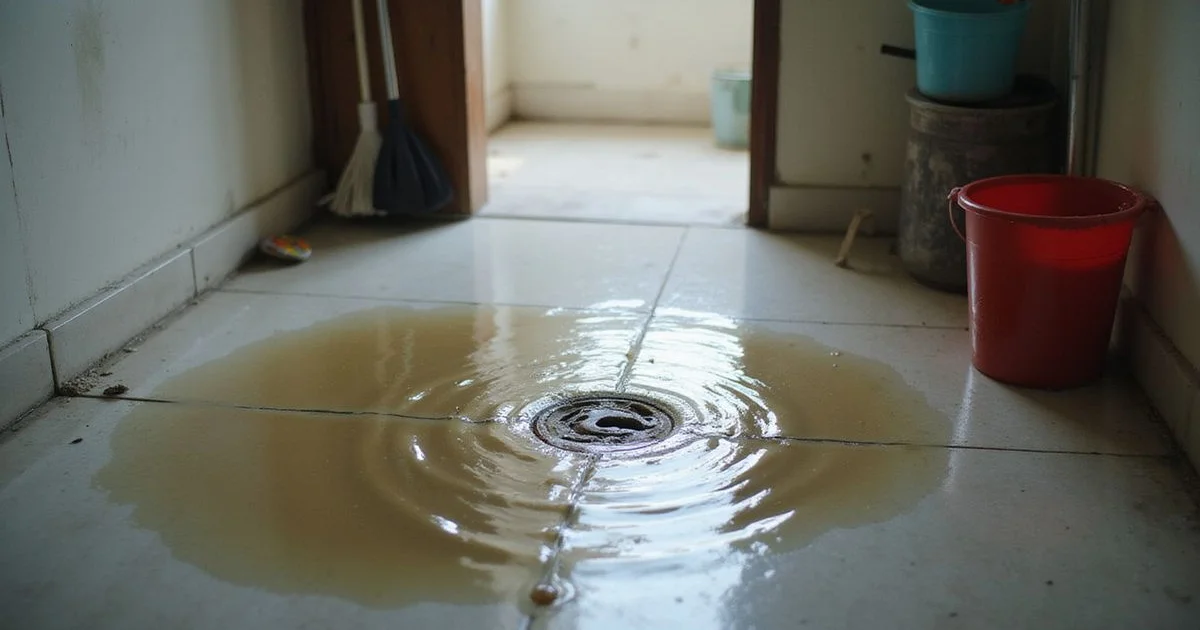
When the floor trap starts working backwards
A floor trap is meant to take water away. When dirty water rises out of it instead, the drain below is blocked and water has nowhere else to go. The key question is where the blockage is. If it is in your own pipe, you arrange the repair. If it is in a shared line, someone else needs to act, and quickly. This guide helps you work out which, for landed houses and for condo units. For blockages in general, see the Blocked Drains and Sinks section.
What to stop using now
Before anything else:
- Stop using water in every fixture that drains to the same line. In a bathroom, that means the toilet, shower, basin and floor trap. If you are not sure which fixtures share a line, stop using water in the whole house for now.
- Switch off the washing machine and dishwasher if they are running.
- Protect your floors. Lay towels and move rugs, furniture and anything electrical away from the water.
- Keep children and pets away from dirty water.
- Take photos showing where the water is coming from and how high it rose.
Is it your pipe or a shared line?
| What you notice | Likely location |
|---|---|
| Only one floor trap backs up, only when you use that bathroom | Your branch pipe, close to that trap |
| Several fixtures on the ground floor back up | Your main house drain, or the sewer connection |
| Water rises when the unit above uses water (condo) | The shared stack below your floor |
| Water backs up across the house after heavy rain (landed) | Outdoor drains, inspection chambers or the sewer connection |
| Neighbours have the same problem at the same time | A shared or public line |
Landed house: manholes, the sewer connection and IWK
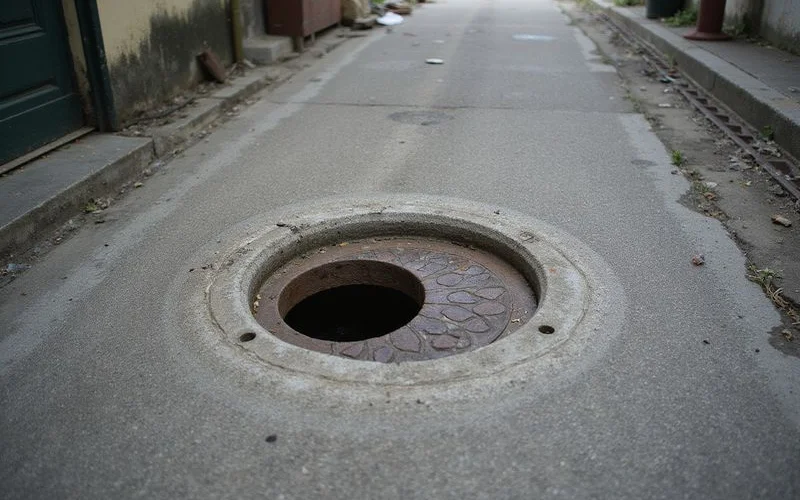
In a landed house, waste water flows from your bathrooms and kitchen through pipes under the house, into inspection chambers (often called manholes) around the property, and then to the connection with the public sewer. The same blocked chambers can also make an outdoor drain overflow after rain.
Check the inspection chambers. These are the concrete or cast-iron covers in your porch, side lane or back yard. Lift the nearest cover carefully, with gloves.
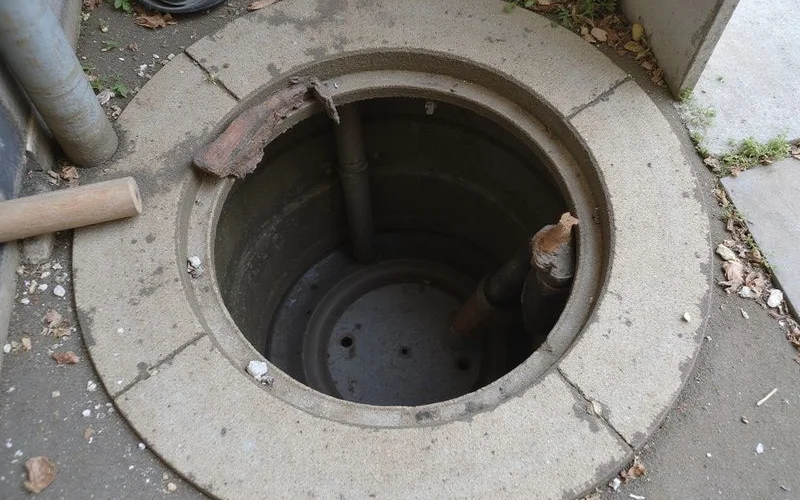
- If the chamber is full of water, the blockage is further downstream, between that chamber and the sewer.
- If the chamber is empty or flowing, the blockage is between your floor trap and that chamber, inside your property.
Drains within your property are usually the owner’s responsibility. The public sewer is handled by Indah Water Konsortium (IWK). If your last chamber before the public connection is full and flowing slowly, and neighbours have the same problem, contact IWK and tell them what you found. Confirm with IWK whether the blockage is on their side.
Older houses may still have a septic tank instead of a sewer connection. A full or failing septic tank can also cause backups, and it needs desludging by a licensed service.
Condo unit: the shared stack and building management
In a condo or apartment, the waste pipes from each unit join a vertical stack that runs down through the building. The stack and the main drains at the bottom are common property, so they are building management’s responsibility.
Signs the stack is the problem:
- Water comes up when you are not using any water yourself
- It happens on lower floors more than higher ones
- Your neighbours on the same stack have the same problem
What to do:
- Tell building management straight away, by phone and in writing, with photos. Ask them to warn the units above to stop using water on that stack.
- Do not try to clear the stack yourself from your floor trap. You could push the blockage further or damage the shared pipe.
- Record any damage to your floors, cabinets and belongings, with dates. If damage results, the question of who pays may follow the inspection process described in the Condo and Strata Leaks section.
If the backup only affects your unit and only when you use water, the blockage is more likely in your own branch pipe, which is yours to clear.
Who to contact for each case
- Your branch pipe or house drain: a plumber.
- Outdoor drains on your property: you, or a plumber if you cannot clear them.
- Public sewer: Indah Water Konsortium (IWK).
- Shared stack in a condo: building management.
- Septic tank: a licensed desludging service.
Cleaning up safely
Waste water can carry germs. Wear rubber gloves and closed shoes. Mop up, then wash the floor with detergent and a household disinfectant. Wash towels on a hot cycle. Throw away anything soft that soaked up a lot of waste water and cannot be cleaned.
When to call a plumber
Call a plumber when the blockage is in your own pipes or house drains and a plunger on the floor trap does not clear it. Tell them what you found in the inspection chambers. It helps them start in the right place. For shared stacks and public sewers, contact building management or IWK first, because a private plumber should not work on pipes that are not yours.