A process, not just a dispute
A ceiling leak from the unit above is one of the most stressful plumbing problems a condo owner can face. You’re dealing with water damage, a neighbour and building management all at once.
The good news is that Malaysia has a set process for it. The Strata Management Act 2013 and the Strata Management (Maintenance and Management) Regulations 2015 cover inter-floor leaks, in Regulations 55 to 67.
Here’s the key point. Building management inspects, then issues a Certificate of Inspection, known as Form 28, naming the cause and the party responsible. The regulations set short deadlines for each stage, which is why the form 28 inter floor leakage process moves faster than most owners expect.
We’ll walk through each step in plain words, from how to report a condo leak to management through to what happens if nobody fixes it. This is general information, not legal advice. For the wider topic, see the Condo and Strata Leaks section.
Who is “building management”?
Building management is either the Joint Management Body (JMB) or the Management Corporation (MC), depending on your development’s stage. Both handle inter-floor leak complaints for the common property. The same body decides whether repairs inside a unit need its consent, as explained in Plumbing Work in a Condo: Do You Need Management Approval?
- The Joint Management Body (JMB), formed in the early years of a strata development, before strata titles are issued and the management corporation takes over, or
- The Management Corporation (MC), formed once strata titles are issued.
In some buildings, a managing agent runs the day-to-day matters for them. Your complaint still goes to the JMB or MC, so address it to them, even if the agent’s office is where you hand it in.
Step 1: report the leak in writing
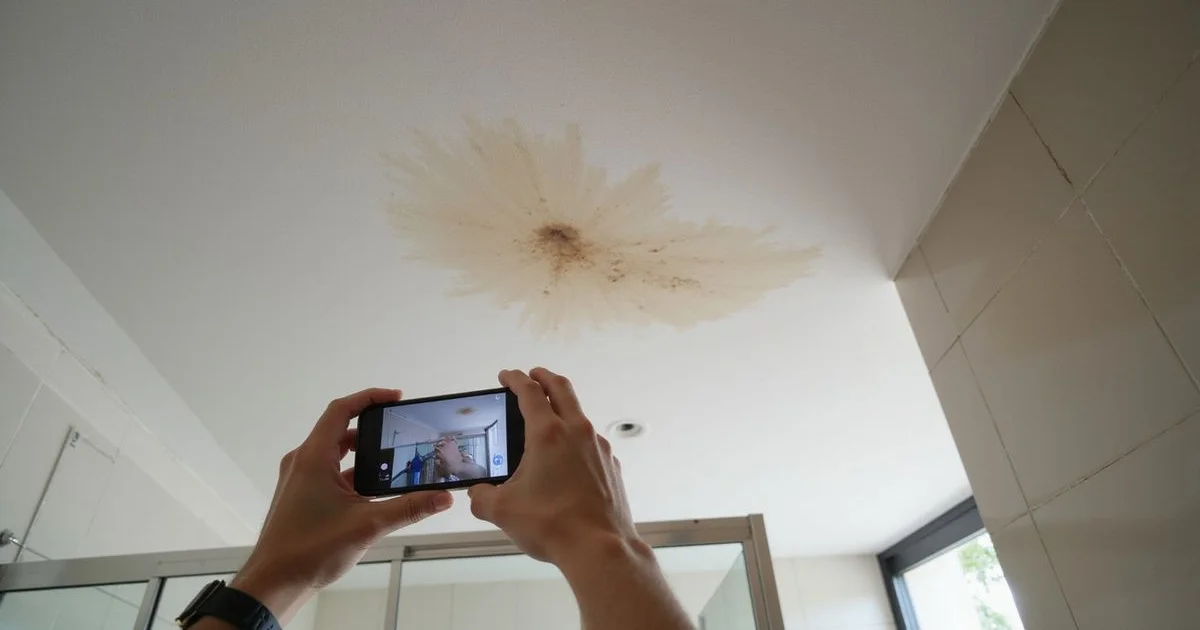
Report the leak to building management in writing, with photos, as soon as you see it. A written report starts the formal process and gives you a dated record.
- Take dated photos and videos of the stain, drips and any damage.
- Report it to building management in writing. Email or a written complaint at the management office. Keep a copy and note the date.
- Include: your unit number, where the leak is, when you first saw it, whether it is getting worse, and your photos.
- Tell your neighbour above, politely, if you can. They may not know.
Why does the date matter so much? Under Regulation 57, the inspection clock runs from the date of your notice, so a verbal chat in the lift lobby won’t start it.

Step 2: inspection by building management
Building management must inspect the affected units within 7 days of your notice, according to commentary on Regulation 57 from Malaysian law firms. That usually means your ceiling and the unit above, which may be the source. They may also test bathrooms, pipes or waterproofing to find the cause.
A pro tip from the legal side: a Form 28 isn’t validly issued unless both the affected unit and the suspected unit were inspected. Burgie Law made this point in an October 2025 article on issuing Form 28. If management only looks at your ceiling, politely ask them to inspect the unit above too.
Cooperate with access to your own unit, and keep a note of when inspectors came and what they did.
Step 3: the Certificate of Inspection (Form 28)
After the inspection, building management issues a Certificate of Inspection, Form 28, within 5 days. It states:
- The cause of the leak
- The party responsible for fixing it
A copy of the form also goes to the Commissioner of Buildings (COB) for reference. The responsible party may be:
| Finding | Usually responsible |
|---|---|
| Leak from pipes, a toilet or failed waterproofing inside the unit above | The owner of the unit above |
| Leak from common property, such as shared pipes or the roof | Building management |
| Leak from your own unit’s pipes | You |
| Cause cannot be found | Building management may have further duties under the regulations; ask them |
Here’s how the deadlines stack up, based on Regulations 57 to 59 as summarised by Malaysian law firms:
| Stage | Deadline |
|---|---|
| Inspection | Within 7 days of your written notice |
| Form 28 issued | Within 5 days of the inspection |
| Repair steps begin | Within 7 days of receiving Form 28 |
One more point helps if the finding is disputed. Section 142 of the Strata Management Act 2013 presumes that a ceiling leak comes from the parcel above, unless someone proves otherwise. Ask building management to confirm the timelines that apply in your building, in case your by-laws add detail.
Step 4: repairs
Once Form 28 names the responsible party, that party must act within 7 days of receiving it. They arrange the repair of the source, and you agree how the damage to your ceiling and belongings will be handled. Keep receipts and photos of the repair.
If you’re the owner of the unit above and your unit is found responsible, arrange the repair promptly. Keep your neighbour and building management informed as the work goes on.
Step 5: if it is not resolved
If the responsible party doesn’t repair, or you disagree with the finding, take it to the COB first. There are two further routes:
- The Commissioner of Buildings (COB) at your local authority oversees strata management matters. If you dispute Form 28, you can refer the dispute to the COB, who decides the cause and the party responsible.
- The Strata Management Tribunal hears certain strata disputes, including some leak matters. You file a Form 1 (Statement of Claim) and attach your evidence, such as photos, letters and Form 28. It is designed to be more accessible than the courts.
Confirm which route applies to your case before you file anything.
If your unit is the one above
If you’re the neighbour being told your bathroom is leaking, treat it as a shared problem. It can feel like an accusation, but a calm response saves time and money. Under the regulations, you have 7 days from receiving Form 28 to start the repair steps.
- Allow access for the inspection. Refusing access usually makes the process slower and harder for everyone.
- Stop using the suspected fixture if the leak is active, such as a shower or toilet, until it is checked.
- Ask for the findings in writing. The certificate names the cause, so you know what to repair.
- Use a qualified plumber or waterproofing contractor, and keep the receipts and photos of the repair.
- Tell building management when it is fixed, so they can confirm and close the matter.
Living with the leak while you wait
Protect your home and your safety first, because even a fast process takes days. These steps help in the meantime:
- Put a bucket under any drip and protect furniture and electronics.
- If water is near a light fitting, switch off that circuit at your distribution board.
- If the ceiling board sags, keep people away from it. A wet board can fall.
- Ventilate the room to limit mould.
- Keep adding dated photos so the record shows how the leak changed.
Your leak file
Keep everything in one folder or phone album. The file is also what you’d attach to a Tribunal claim if it ever got that far.
| Item | Why it matters |
|---|---|
| Dated photos and videos | Show when it started and how it spread |
| Copies of written reports | Prove when you reported it |
| Names and dates of inspections | Track the process |
| The Certificate of Inspection | States the cause and responsible party |
| Repair quotes and receipts | Support any discussion about costs |
| Messages with your neighbour | Show what was agreed |
Tips that help
These habits make the biggest difference, based on the leak cases we see:
- Put everything in writing, and keep copies.
- Take photos with dates before and after each step.
- Stay polite with your neighbour. Most leaks are not intentional.
- Do not hack or repair the source yourself if it is in another unit or common property.
- Confirm timelines with building management at each step.
What this guide does not cover
This guide doesn’t cover insurance claims, renovation disputes or leaks in landed houses. For leaks in your own unit that aren’t affecting others, the Pipe Leaks section and our guide on who to call for a water leak are more relevant.
Confirm before you act
This is general information, not legal advice. The Strata Management Act 2013, its regulations and your building by-laws set the actual rules, and individual cases differ.
Your next step is simple. Send your written report to the JMB or MC today, with dated photos, and ask for the inspection date. If you’re in a dispute, confirm the details with the Commissioner of Buildings and get qualified advice.