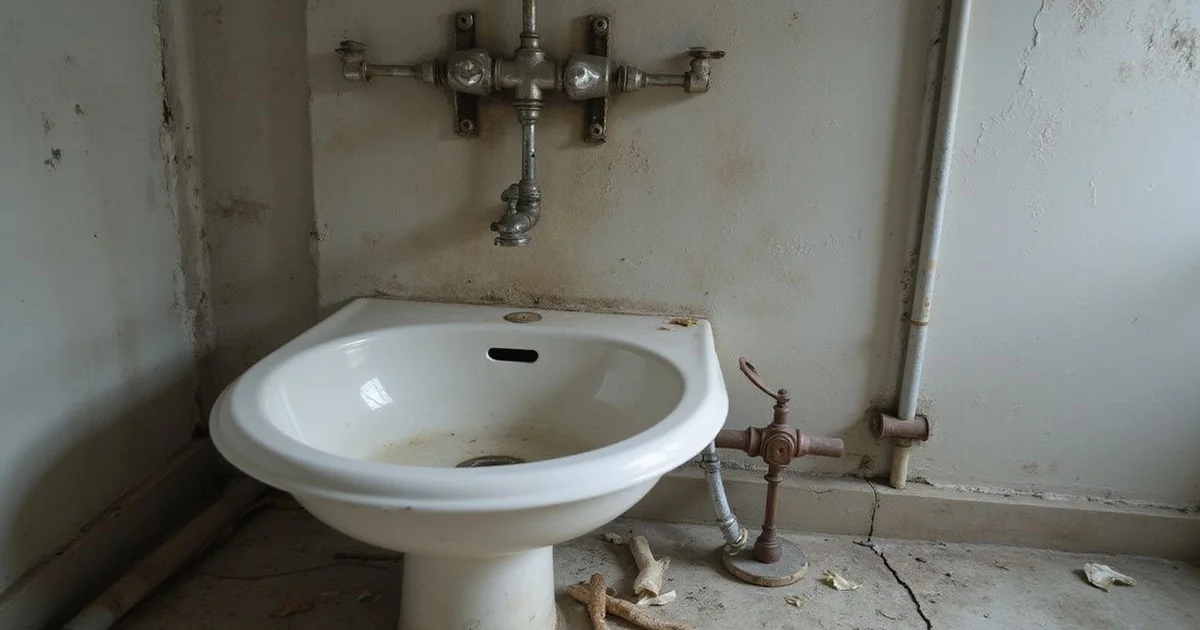
What a sink or basin swap involves
If you want to replace a kitchen sink or replace a bathroom basin, the plumbing is usually the easy part. The surprises tend to come from the countertop, the tiles and the fit of the new unit.
People swap them for all sorts of reasons: cracks, stains, chips or just a dated look.
We wrote this guide for landed house owners in KL and the Klang Valley who want to know what basin replacement involves before anyone turns up with a spanner. It covers the usual steps, what to check before you buy and how long the job takes. It’s part of the Taps and Fixtures section.
It does not cover renovation design or tiling choices.
Before you buy
Measure the existing sink or basin first, then check these five things:
- Type: top-mount (sits on the counter), undermount (fixed below the counter), wall-hung, pedestal or countertop vessel.
- Cut-out size in the countertop, for kitchen sinks and inset basins.
- Waste outlet position: centre or offset, and its height for wall-hung basins.
- Tap holes: how many, and where, or whether the tap mounts on the wall or counter.
- Overflow: some basins have one, some do not. The waste fitting must match.
If the new unit has the same type and size, the job is much simpler.
Don’t assume “standard” means the same size. Spec sheets for undermount stainless sinks sold in the region list cut-outs from about 506 x 486 mm for compact bowls to about 856 x 486 mm for large ones. Many also list a 90 mm waste hole and 35 mm tap holes, so check those against your tap and trap too.
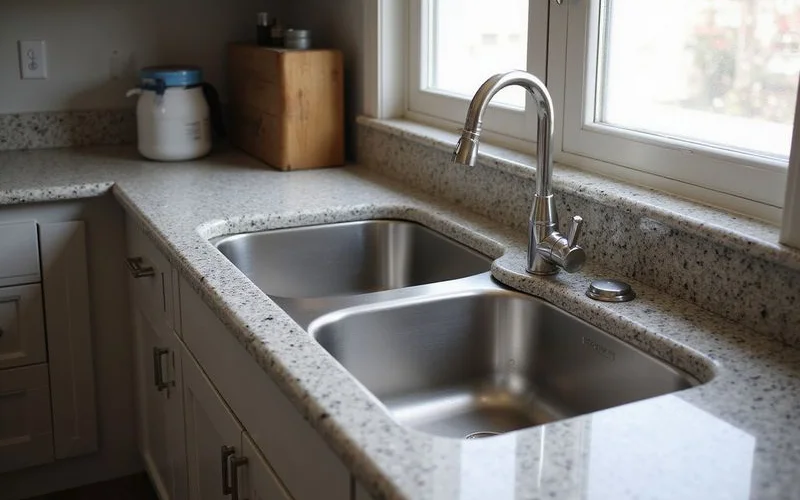
The steps
Most swaps follow the same nine steps, in this order.
- Turn off the water at the angle valves under the sink, or the main supply.
- Disconnect the tap hoses and the waste trap.
- Remove the old unit. Cut through old sealant, undo clips or brackets, and lift it out.
- Clean the surface and check the countertop or wall for damage.
- Prepare the new unit. Fit the tap and waste outlet to it first, where possible.
- Set it in place with fresh sealant and its clips or brackets.
- Reconnect the supply hoses and the waste trap.
- Test. Run water, fill and drain, and check every joint for drips.
- Seal the edges neatly with silicone.
Pro tip: Step 5 is much easier on the floor or a workbench than upside down inside a cabinet. Fit the tap and waste before the unit goes anywhere near the counter.
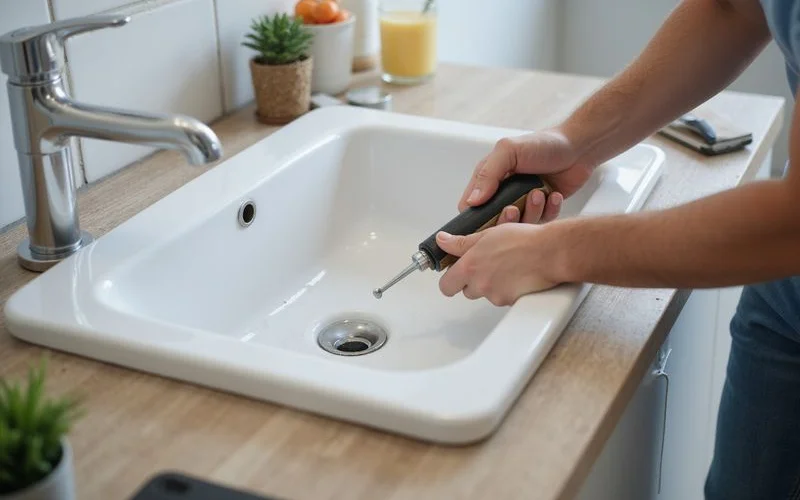
Waste connection
The waste is the part most likely to cause trouble later. If the new outlet sits in a different position, the trap may need extending or replacing.
Ask the plumber to fit a new trap and washers rather than reusing old, brittle parts. Our guide on water leaking under the kitchen sink covers the joints that commonly leak.
A good waste job usually includes:
- A new trap, not the old one refitted.
- New washers at every joint.
- A waste fitting that matches the basin, with or without an overflow.
Countertop and tile considerations
A top-mount sink is usually the simplest swap, and the other types add risk. Here is how each one behaves:
- Top-mount sinks drop into the cut-out and rest on their rim. They are usually the simplest swap.
- Undermount sinks are fixed below a stone counter with brackets and adhesive. Removal can risk chipping the counter, and the new sink must match the cut-out exactly.
- Wall-hung basins need solid fixings in the wall. Changing the size or position may expose untiled patches or need new fixing points.
- Moving the position of a sink or basin means moving pipes, which usually means hacking.
This handbook does not give renovation advice. If the countertop or tiles need work, ask whether the plumber includes it or whether you need a separate contractor.
Common surprises, and how to avoid them
Most surprises show up once the old unit is out, so it helps to know them in advance.
- The old sink is stuck fast. Old sealant and corroded clips can make removal slow. Allow extra time on older kitchens.
- The angle valves will not shut. Old valves can seize. If they do, the water has to be turned off at the main supply, and the valves may need replacing.
- The waste pipe in the wall is in the wrong place for the new basin. Small differences can be bridged with an extended trap. Big ones mean moving the pipe.
- The new tap does not fit. Check the tap hole size and the number of holes before buying.
- Hidden damage. A slow leak under the old sink may have damaged the cabinet or the countertop edge. It only shows once the sink is out.
Time
A like-for-like swap is often done within a few hours. The sealant is what sets the real finish line.
Most sanitary silicones need at least 24 hours before they touch water, and some take up to 72 hours to cure fully. Check the label on the tube, because the cure time varies by product.
| Job | What to expect |
|---|---|
| Like-for-like swap | A few hours |
| Countertop work or new fixings | Longer, depending on the repair |
| Moving pipes | Longer, and may need hacking |
| Silicone curing | Usually 24 to 72 hours, so avoid heavy use meanwhile |
Questions to ask before work starts
Put these to the plumber before you agree a date. Each one heads off a common argument later.
- Will the new unit fit the existing cut-out and pipes?
- Is a new trap, waste fitting and hoses included?
- Who removes and disposes of the old unit?
- Is any countertop or tile work included?
- What happens if the counter is damaged during removal?
- What warranty covers the installation?
Our guide on what a written plumbing quote should include has a full checklist.
Landed house and condo notes
Landed house. You can schedule the work freely. If you are also changing the tap, consider the water pressure in that room.
Condo unit. Check house rules on working hours and debris removal. If moving the sink means moving pipes in the floor or wall, ask management whether there are any restrictions, and make sure nothing touches shared pipes.
When to call a plumber
Call a plumber to check the fit before you buy, especially for undermount, wall-hung or different-sized units. A quick visit costs far less than returning a sink that doesn’t fit.
Book the job once you have a written quote that covers removal, fitting, new waste parts, sealing and any making good. With that in hand, your basin replacement or kitchen sink swap should have few surprises.