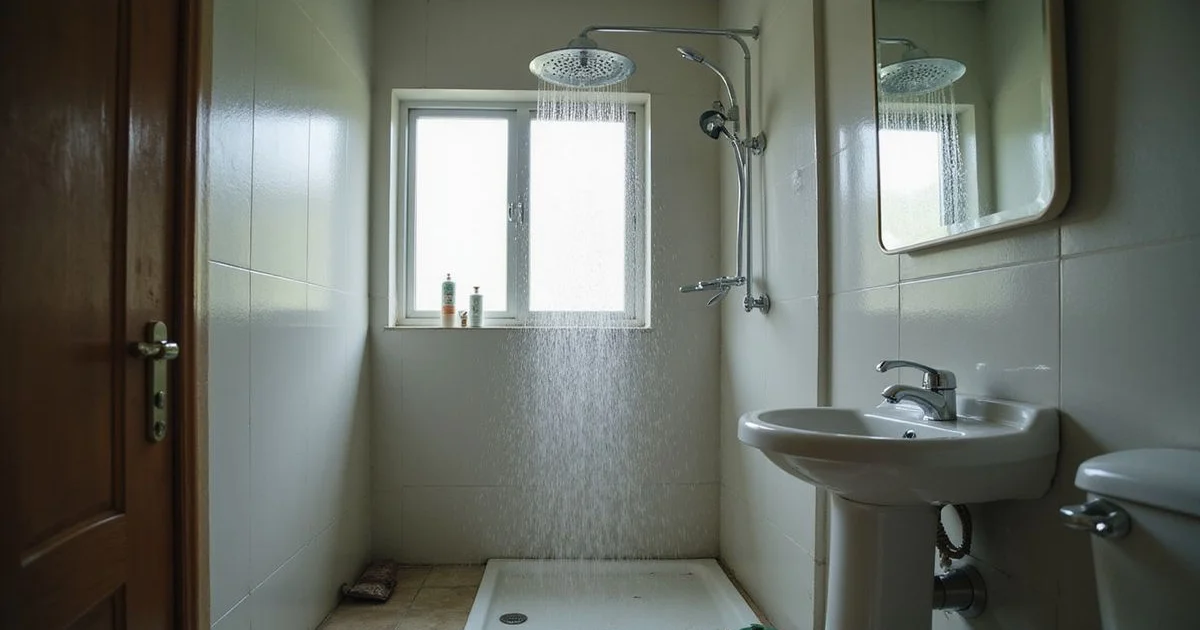
Why upstairs taps are weaker
Weak water pressure upstairs, with normal pressure downstairs, is one of the most common complaints in two-storey landed houses in the Klang Valley. The shower upstairs trickles while the kitchen tap gushes. It is not usually a fault. It is how gravity-fed systems work. But there are ways to improve it. This guide explains the causes and the options. It is part of the Water Pressure section, and it covers booster pumps and pipe size together, because they work as a pair.
Cause 1: the height of the tank
Many landed houses store water in a roof tank. Taps fed from the tank get their pressure from gravity. The more height between the bottom of the tank and the tap, the stronger the flow.
- A ground floor tap may be well below the tank, so it gets good pressure.
- An upstairs shower may be only a short distance below the tank, so it gets very little.
The kitchen tap may also be fed straight from the mains, which is why it can be much stronger than everything else.
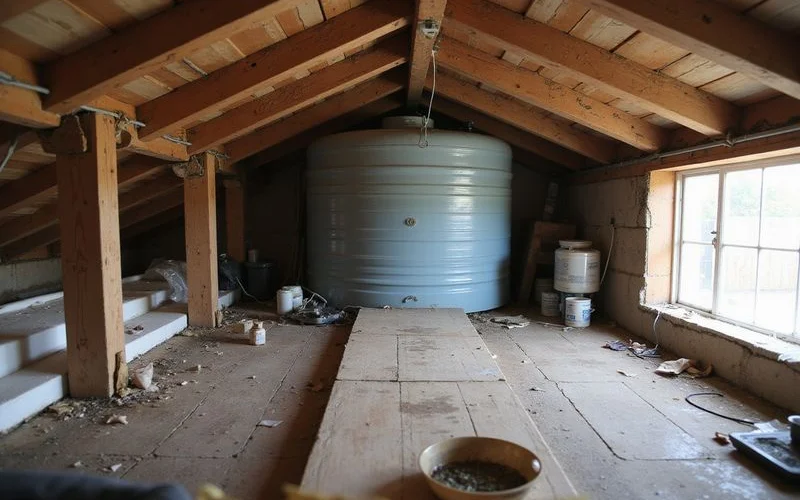
Cause 2: pipe size and long runs
Narrow pipes, long runs, many bends and many fittings all reduce flow. A pipe that is fine for one tap may struggle when two showers run at once. Pipes that were sized for a smaller house may not cope after an extension.
Cause 3: rust in galvanised iron pipes
Older houses may have galvanised iron (GI) pipes. Rust builds up inside them over the years, narrowing the bore. Flow drops at every tap, but upstairs suffers most because it had the least pressure to start with. If you also see brown water or repeat leaks, read the Pipe Replacement section.
Other things to rule out
- Clogged aerators and shower heads. Unscrew and clean them. If only one tap is weak, this is the most likely cause.
- Partly closed valves, including the tank outlet valve and isolation valves.
- Low tank level after a water cut.
- An instant water heater that restricts flow. Some need a minimum flow to work properly.
A simple bucket test
You do not need a pressure gauge to compare taps. A bucket and a phone timer are enough.
- Use a bucket or container marked with litres, or one you know the size of.
- Open the tap or shower fully.
- Time how many seconds it takes to fill a set amount, for example 5 litres.
- Work out litres per minute: litres divided by seconds, times 60.
- Repeat at other taps, upstairs and downstairs, and at different times of day.
Write the results down. They show a plumber exactly where flow is weakest, and they let you check whether a fix actually helped.
The booster pump option
A booster pump takes water from the tank and pushes it to the taps at higher pressure. It is the most common fix for weak upstairs pressure in landed houses.
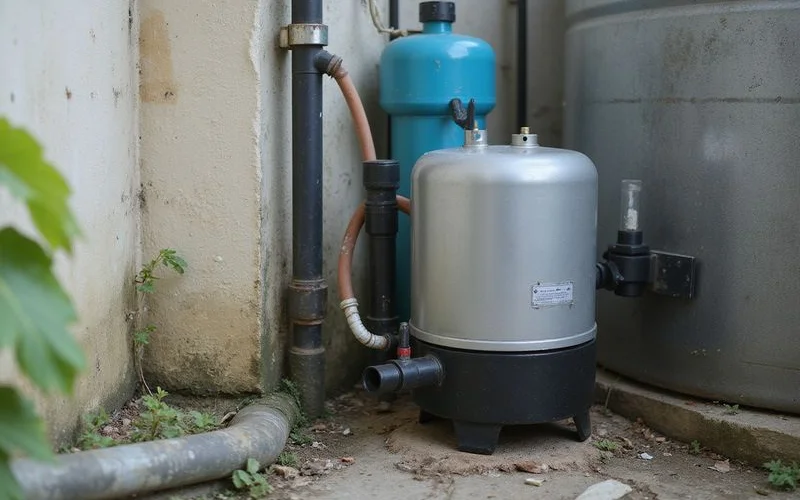
Things to know:
- A pump needs a reliable water source, usually the tank. If the tank empties, the pump must not run dry.
- It needs power, a suitable location, and protection from rain.
- It can be noisy, so think about where it goes.
- More pressure puts more strain on old pipes and joints. Weak joints may start leaking.
The Water Pumps section explains pump types and common faults.
Why pipe size and pump go together
A pump raises pressure, but flow also depends on the pipe. If the pipes upstairs are narrow, long or clogged, a pump alone may not give the result you want, and it may stress old pipes. If the pipes are adequate, a pump can make a big difference.
| Situation | Likely best fix |
|---|---|
| Pipes adequate, tank low on the roof | Booster pump |
| Old GI pipes, brown water, weak everywhere | Repipe, with or without a pump |
| Narrow pipe to one bathroom | Upsize that run, maybe add a pump |
| One tap weak | Clean aerator or shower head, check its valve |
| Weak only after water cuts | Check tank level and refill |
Landed house note
This guide is mainly for landed houses, where the owner looks after the tank, pump and pipes. For condos, read Low Water Pressure in a Condo or High-Rise Unit, because the building’s tanks and pumps play a bigger part.
When to call a plumber
Call a plumber to check pipe sizes, pipe condition and the tank before you buy a pump. Ask them to explain whether a pump alone will help, or whether pipe work is needed too. If you fit a pump, ask about dry-run protection and where it will be placed. The partner plumber’s pump inspection fee, and whether it is waived, is shown in the Water Pumps section.