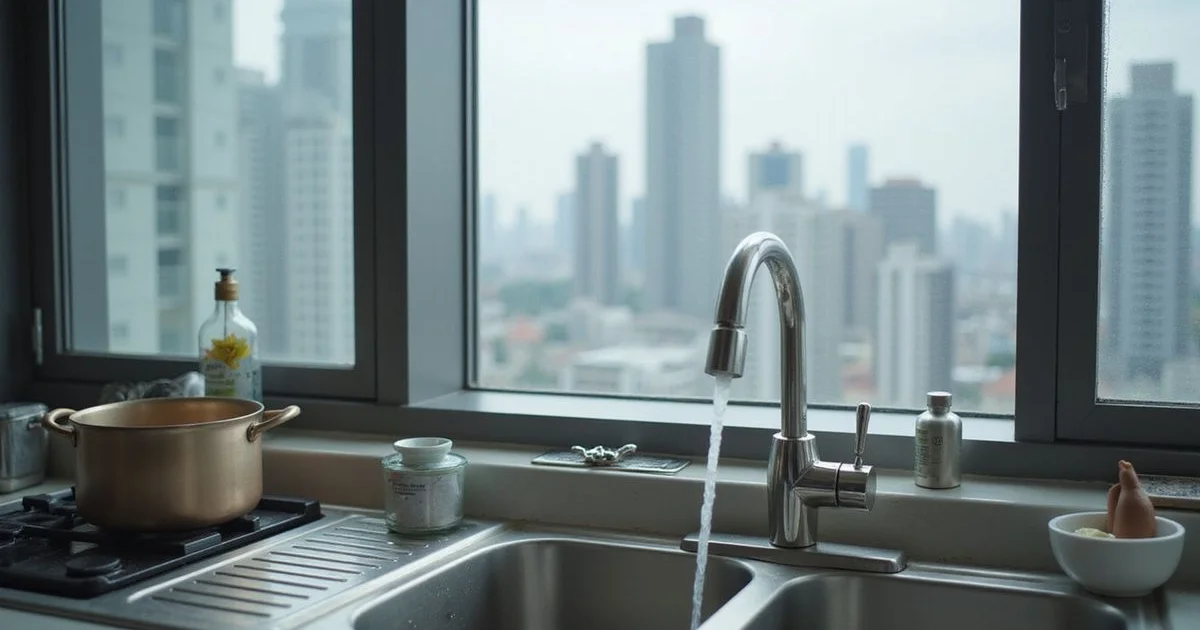
Is it your unit or the building?
Low water pressure in a condo or high-rise unit comes from one of two places: the building, or your unit. The building supplies water through shared tanks, pumps and pipes. In Malaysia, the developer, the JMB or the MC looks after those under the Strata Management Act 2013, while you look after everything inside your unit.
Finding out which side has the fault saves time and money. It also stops you paying a plumber to fix a problem that belongs to management.
Here’s how we sort it out, step by step. It’s part of our Water Pressure section.
Start by asking your neighbours
Ask a neighbour on the same floor, and one on a different floor if you can. If they have weak pressure too, the cause is almost certainly the building. If they don’t, look inside your own unit. If only the upper floor of a duplex unit or landed home is weak, see Weak Water Pressure Upstairs Only.
| Who is affected | Likely cause |
|---|---|
| Many units, especially on the same stack | Building pumps, tanks or main pipes |
| Higher floors more than lower floors | Building pumps or pressure zones |
| Only at peak hours, across the building | Building supply struggling with demand |
| Only your unit | Something inside your unit |
| Only one tap in your unit | That tap, its aerator or its valve |
A residents’ chat group is the quickest way to ask. One message, “Anyone else on floors 15 to 20 seeing weak water since this morning?”, can answer the question in minutes.
Building-side causes
Building-side problems are anything in the shared supply before water reaches your unit’s valve. Management owns these, so you can’t fix them yourself.
- Building pumps running poorly, under maintenance or failing
- Shared tanks running low, for example after a water cut
- Pressure zones in tall buildings not set correctly
- Main pipes or risers partly blocked or leaking
- Peak demand in the morning and evening
Tanks are the usual suspect after a scheduled water cut. They need time to refill, and the top floors feel the shortage first. See below for what to ask management.
In-unit causes you can check
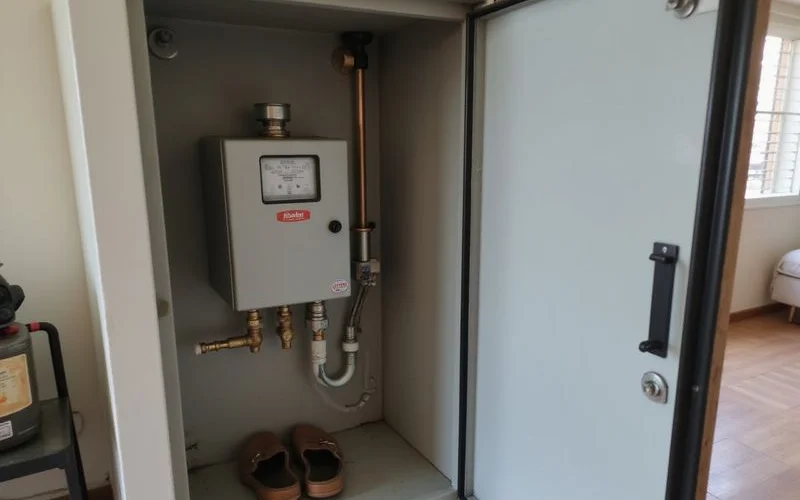
Most in-unit causes are simple and cost nothing to check. Start with the valves, then work down to the taps and heater.
- Partly closed valves. Your unit valve, often near the meter in the corridor riser or in the kitchen, may have been partly closed during a repair. Make sure it is fully open.
- Clogged aerators. Unscrew the tip of the tap and clean the mesh. Sediment builds up, especially after water cuts.
- Clogged shower heads. Soak in vinegar and clean the holes. This is the usual fix when a condo shower feels weak but the basin taps are fine.
- Water filters. A filter cartridge that needs replacing slows flow.
- Water heater. Some instant heaters restrict flow, and a blocked inlet filter on a heater can slow hot water.
- Angle valves under sinks and toilets partly closed.
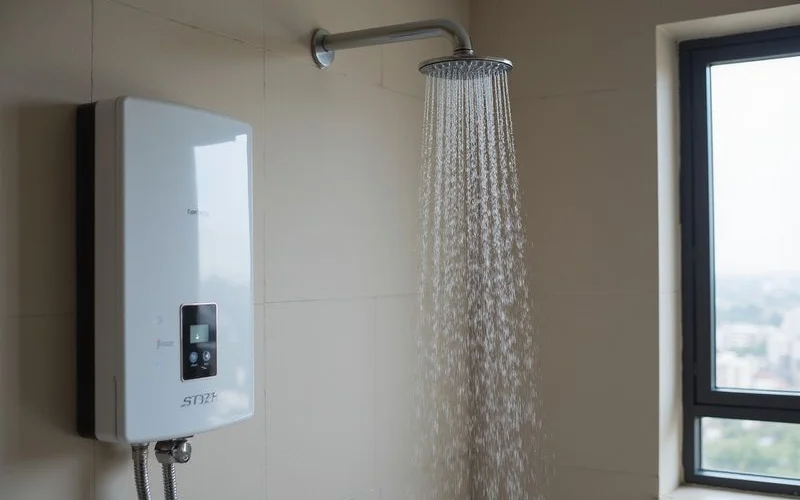
If only the hot water is weak, look at the heater first. Our guide comparing instant and storage water heaters explains why instant heaters need good flow. Check your heater’s manual too, as many models need a minimum flow before they switch on.
A simple bucket test
A bucket and a phone timer are enough to compare taps. You don’t need a pressure gauge.
- Use a bucket or container marked with litres, or one you know the size of.
- Open the tap or shower fully.
- Time how many seconds it takes to fill a set amount, for example 5 litres.
- Work out litres per minute: litres divided by seconds, times 60.
- Repeat at other taps, in the kitchen and each bathroom, and at different times of day.
For example, 5 litres in 30 seconds works out at 10 litres per minute. Write the results down. They show a plumber exactly where flow is weakest, and they let you check whether a fix actually helped.
Keep a short pressure log
Keep the log for a week. A log turns “the pressure is bad” into evidence that building management can act on.
Note these each time:
- The date and time
- Which taps were weak, and whether hot, cold or both
- Whether there was a water cut or maintenance notice that day
- Your bucket test result, if you did one
After a week, you can see whether the problem follows peak hours, water cuts or maintenance.
What to ask building management
If the problem seems to be building-wide, contact building management in writing. A written message gives you a record, and it is harder to ignore than a chat at the lobby. Ask:
- Are the building pumps working normally?
- Have the tanks been refilled fully after any recent water cut?
- Is there a known pressure problem on my floor or stack?
- Is any maintenance planned?
- Are other residents reporting the same?
Attach your pressure log and note the dates and times when pressure is low. It helps management find the cause.
Booster pumps in condos
Ask building management before you install a private booster pump. Many buildings restrict them, because a pump in one unit can pull water from the shared supply and lower pressure for neighbours.
A few points to settle first:
- House rules vary, so get any approval in writing.
- A plumber should check whether your unit’s pipes and valves suit a pump.
- A pump can’t create water. If the tank is empty, a pump won’t help.
Peak-hour drops
If pressure is fine most of the day and weak at peak times, many units are using water together. Some drop at peak hours is normal, since everyone showers before work and cooks in the evening.
A large drop that makes showers unusable is worth reporting. Use your log and bucket results to show management how bad it gets and when.
Condo note on responsibility
In high-rise buildings, building management looks after the shared tanks and main pipes. The owner looks after pipes inside the unit.
Where exactly that line sits can differ between buildings. Confirm with your management where the boundary sits in yours, ideally at the unit valve or meter, and keep that reply on file.
When to call a plumber
Call a plumber if neighbours are not affected, your valves are fully open, aerators and shower heads are clean, and pressure is still weak. If low water pressure in your condo points to your own unit, the cause may be a partly blocked pipe, a faulty valve or a heater issue.
For building-wide problems, go to building management first. Check house rules for contractor hours before booking, and bring your bucket test results and pressure log to the visit. Your next step is simple: run the bucket test today, then message your management if the neighbours report the same.