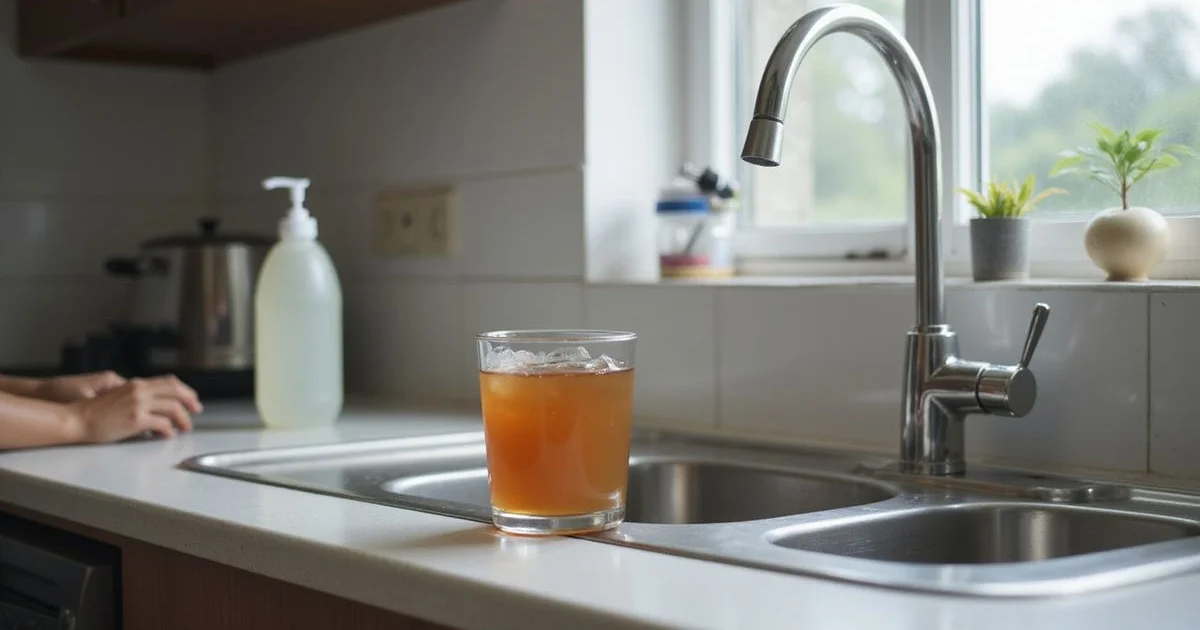
Where brown water comes from
Brown water from the tap looks alarming, but a few simple checks usually narrow down the cause. It comes from one of three places: the public supply, your storage tank, or your own pipes.
At KL Plumbing Handbook, we explain home plumbing in plain language for Klang Valley homes. Each source has a different fix and a different person responsible.
This guide helps you work out which one you’re dealing with. It also sits in our Pipe Replacement section, because in older houses, rusting pipes are a common culprit.
Safety first
Is brown tap water safe? Treat it as not safe until you know the cause.
Malaysia’s National Standard for Drinking Water Quality caps iron at 0.3 mg/L. Rusty water often sits above that, and you can’t tell by eye whether it also carries sediment or something worse.
Until you know more:
- Don’t drink brown water, or use it for cooking or baby formula.
- Use bottled or stored water for drinking.
- Skip white laundry, because brown water can stain it.
Check 1: after a water cut, or all the time?
If it follows a water cut, it’s usually harmless and short-lived. The mains refills under pressure and stirs up sediment that settled while the pipes were empty. During the July 2024 Klang Valley disruption, Air Selangor said discoloured water was normal as supply returned.
Run a cold tap on the ground floor, ideally the kitchen tap fed directly from the mains, until it runs clear. It often clears within minutes to an hour.
If the brown water shows up all the time or keeps coming back, look closer to home. The cause is more likely your tank or your pipes.
Check 2: one tap or every tap?
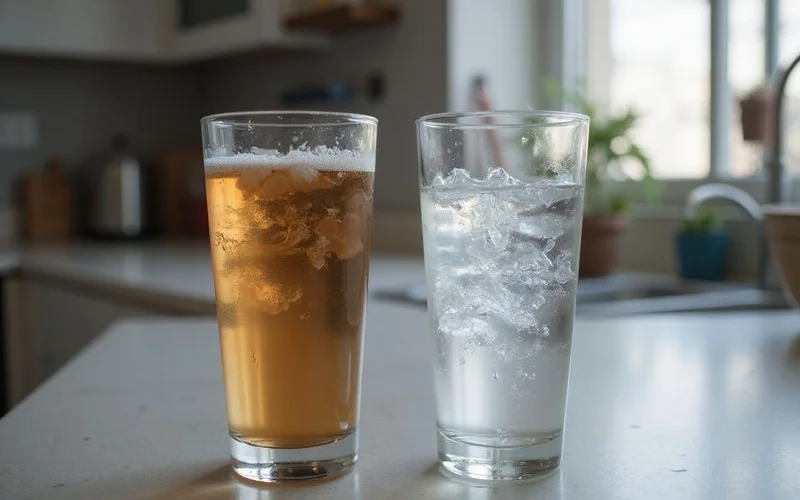
Which taps run brown tells you most of what you need. Use this table to match what you see to the likely source.
| What you see | Likely source |
|---|---|
| Every tap, hot and cold, including the mains-fed kitchen tap | The supply, or the pipe from the meter |
| Only tank-fed taps (upstairs, showers), mains-fed tap is clear | The tank |
| Only hot taps | The water heater or hot water pipes |
| Only one tap | That tap, its valve or its branch pipe |
| Mostly in the morning, clears after running | Water sitting in old metal pipes overnight |
Check 3: are the neighbours affected?
Ask a neighbour or two. If they have brown water too, the problem is almost certainly in the supply, and you should contact Air Selangor.
If the street is clear and only your house is brown, the fault is on your side of the meter. That points to your tank or your pipes.
Galvanised iron pipes in older houses
Rusty water from old pipes is most often a galvanised iron (GI) problem. Many older landed houses in the Klang Valley, especially in mature areas such as parts of Petaling Jaya, still have GI pipes. They were standard decades ago, and they rust from the inside over time.
Once the zinc coating wears away, the iron underneath corrodes and flakes into your water. Plumbing sources often put GI pipe life at around 40 to 50 years, and less in harsh environments. Pipes laid in the 1970s or 1980s are at or past that mark.
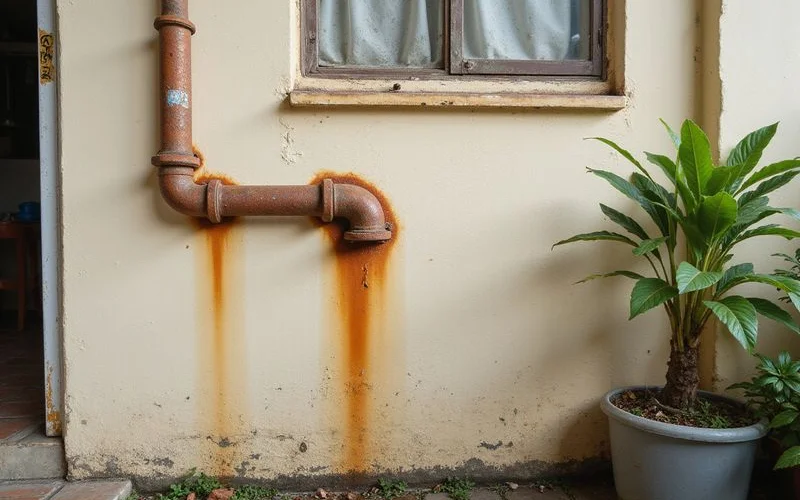
Signs of rusting GI pipes:
- Brown or rusty water, often worst first thing in the morning
- Weak flow at every tap, because rust narrows the pipes
- Leaks that keep coming back in different places
- Rust visible on any exposed pipes
If your house has GI pipes and these signs, repairing one leak at a time rarely solves it. Our guide on pipe repair or repiping the house helps you decide.
Brown water from hot taps only
If cold taps run clear but hot water comes out brown or orange, the problem sits on the hot side. There are three usual suspects:
- A storage water heater with a corroding inner tank can colour the water. Rust stains on the casing or water leaking from the base are warning signs. Our guide on repairing or replacing a water heater covers when a corroded heater should be replaced.
- Old metal pipes on the hot side, which corrode faster because of the heat.
- Sediment collected in the bottom of a storage heater.
What to note before you call anyone
A few notes make the diagnosis much quicker, and a plumber will usually ask for them first. Jot these down:
- Which taps are affected: hot, cold, upstairs, downstairs, mains-fed or tank-fed?
- When it happens: after a water cut, first thing in the morning, all day?
- How long it takes to clear when you run the tap.
- Whether neighbours are affected.
- Photos of the water in a clear glass, with the date.
- Roughly how old the house, the pipes, the tank and the heater are.
Tank sediment
If only tank-fed taps give brown water, sediment in the tank is the likely cause. Each water cut and refill brings fresh sediment into the tank. It settles on the bottom and gets stirred up when the tank refills.
Steel tanks can also rust from the inside. Our Water Tanks section covers cleaning and when to replace a tank.
When to contact Air Selangor
Contact Air Selangor if the problem looks like it comes from the supply. That means any of these:
- Neighbours have brown water too
- The mains-fed tap before your tank gives brown water
- It lasts long after a water cut
- You notice a smell or taste as well
Air Selangor is responsible for the supply up to your meter. Its hotline, 15300, runs 24 hours a day, and the Air Selangor app is another way to log a complaint. Quote the date, your address and your photos.
Landed house and condo notes
Landed house. After the meter, the pipes and the tank are yours. Brown water from your side is yours to fix.
Condo unit. Shared tanks and main pipes are building management’s responsibility. If several units have brown water, report it to management and ask when the tanks were last cleaned. If only your unit is affected, the cause may be your unit’s pipes or heater.
When to call a plumber
Call a plumber if brown water from your tap comes only from your house, keeps coming back, or arrives with weak pressure and repeat leaks. Ask them to check the pipe material and the tank.
If your house has old GI pipes, ask for an honest opinion on whether repiping makes sense. Get any repiping quote in writing, and send them the notes and photos from your checks so they can start with the right questions.