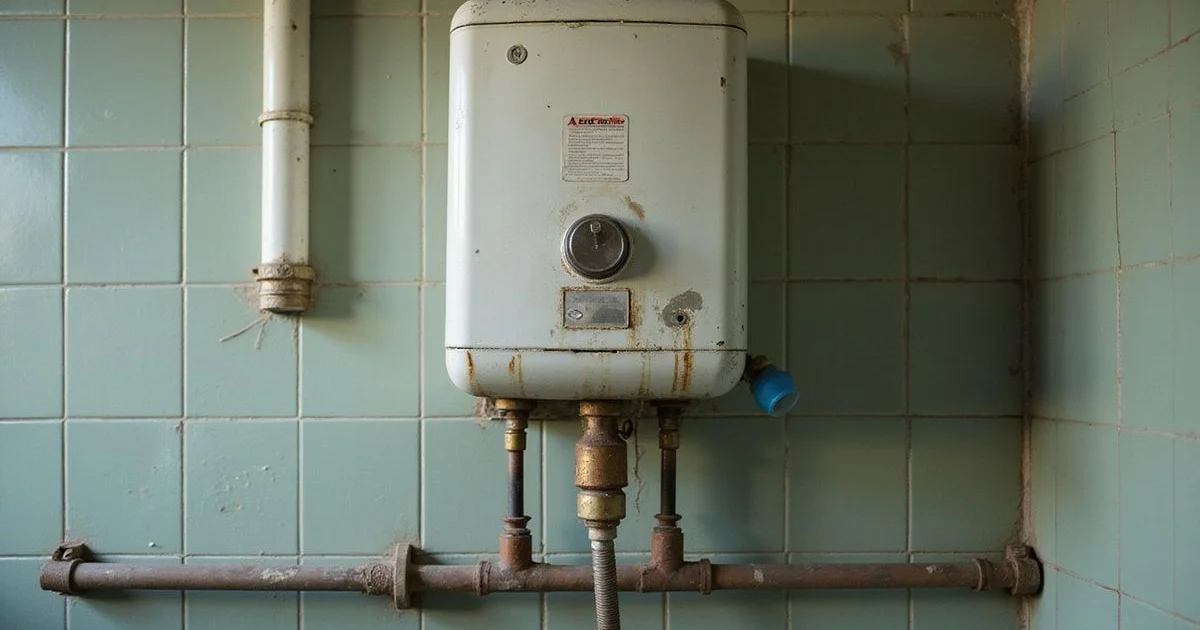
A practical way to decide
You know how a water heater tends to fail on the one morning you need it most? The question then is whether to repair or replace the water heater, and the honest answer is that it depends on three things. Those are the heater’s age, the fault, and whether there is any safety concern.
A repair is cheaper on the day. A replacement can be cheaper over time, and sometimes it is the only safe option.
We’ll go through each of those three checks below, then give you a simple table to decide with. It’s part of our Water Heaters section.
What affects a heater’s lifespan
There is no fixed water heater lifespan, and we don’t quote average figures here. Six factors make the biggest difference to how long an old water heater keeps going:
- Type: instant heaters and storage heaters wear in different ways.
- Water quality: sediment and minerals build up on elements and inside tanks. Rheem Malaysia names hard water and humid conditions as common reasons tanks fail early.
- Use: a heater used many times a day by a large family works harder.
- Installation: heaters fitted with proper support, valves and wiring tend to last longer.
- Maintenance: storage heaters with working valves and occasional checks age better.
- Water cuts: heaters that run with little or no water can be damaged.
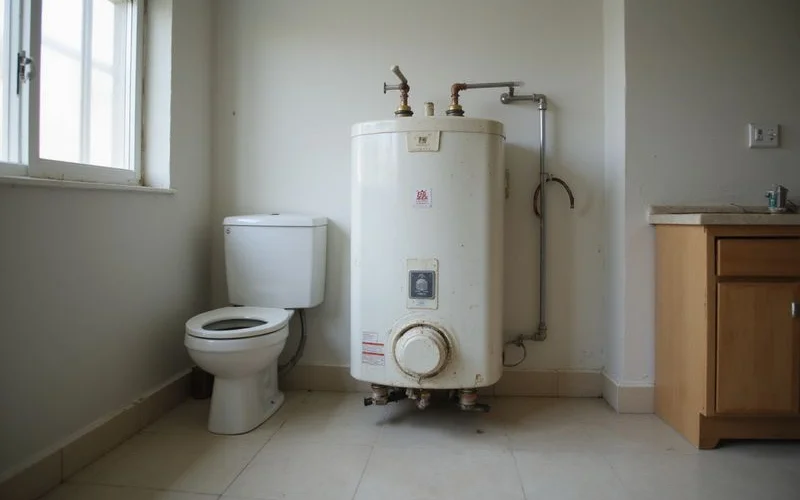
If you own a landed house, the second point matters most. Sediment is the quiet problem that shortens a storage tank’s life, and you won’t see it until the heater starts to struggle.
Repairable faults
Most single faults on a newer heater are worth repairing. Each one below has a usual fix:
| Fault | Usual fix |
|---|---|
| Lukewarm water, element faulty | Replace the element |
| Thermostat fault | Replace the thermostat |
| Leaking pipe joint or hose | Replace the joint or hose |
| Faulty switch | Replace the switch (by a qualified person) |
| Weak flow from a blocked filter or shower head | Clean or replace the filter or head |
| Pressure relief valve dripping | Check pressure; replace the valve if faulty |
Weak flow is the one we see most often in landed houses. Check the shower head and the inlet filter first, because a blocked one is a quick, cheap fix.
Faults that usually mean replacement
A storage tank that leaks from the body is the clearest sign to replace. Beyond that, these faults usually point to replacement:
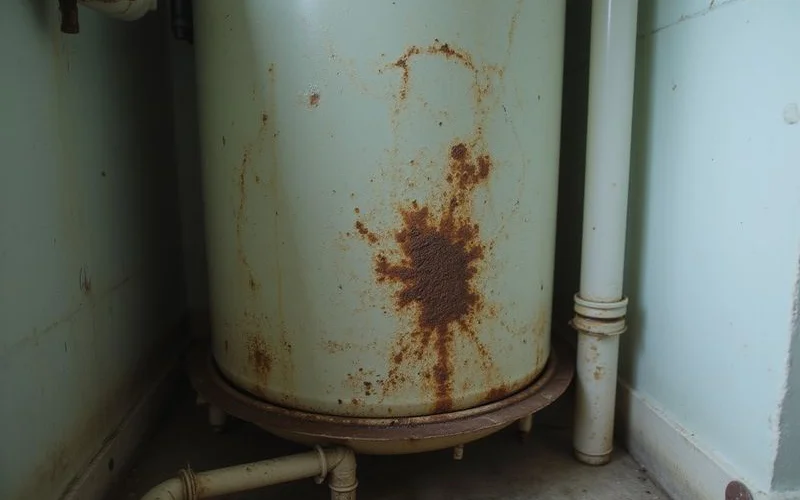
- Corrosion of a storage tank. Rust stains, water leaking from the tank body or the bottom of the casing. A corroded tank cannot be reliably repaired.
- Cracked or damaged casing, especially if water can get in.
- Repeated electrical faults, such as tripping that returns after repairs.
- Parts not available for an old or discontinued model.
- Several faults at once, where repairs would cost close to a new heater.
Rheem Malaysia offers a handy rule of thumb here. A heater shouldn’t need fixing more than about twice a year. If yours does, the repairs are probably telling you something.
Safety red lines
Any of the situations below should push you to replace the heater. At the very least, get a full check before you use it again:
- The heater trips the ELCB or RCCB again after a repair.
- There is water inside the casing or switch.
- You see scorch marks, melted plastic or smell burning.
- A storage heater’s pressure relief valve is missing, blocked or capped, and cannot be put right.
- The heater was installed without proper earthing or an earth leakage device.
If any of these apply, switch the heater off at the switch and breaker. Don’t use it until a qualified person has checked it. Our guide on a water heater that keeps tripping the breaker covers what to do.
Suruhanjaya Tenaga publishes a guideline on the design, installation, testing and maintenance of water heater systems. It also advises households to press the test button on the heater’s ELCB about once a month. If the button does nothing, treat that as a red line too.
Cost factors
Repair costs depend on the part, the labour and who needs to come. We don’t quote average repair or replacement costs here, because they vary too much between homes.
Repair:
- The part needed, such as an element or thermostat
- Labour and access
- Whether both a plumber and an electrician are needed
Replacement:
- The new heater, which varies by type, brand and size
- Removal and disposal of the old heater
- Changes to pipes, wiring or mounting
- Whether you change type, for example from storage to instant
For instant heater installation, the partner’s published starting price is listed in the Water Heaters section. Ask for a written quote that separates the heater, the labour and any extra work.
A split quote also shows you quickly whether a repair is nearing the price of a new unit.
A simple decision guide
Find the row that matches your situation, and you have your answer:
| Your situation | Best move |
|---|---|
| Newer heater, single fault, parts available | Repair |
| Older heater, first fault, otherwise working well | Repair, but plan for replacement |
| Older heater, second or third fault in a short time | Replace |
| Storage tank leaking from the body | Replace |
| Any safety red line | Replace, or full check first |
| Renovating the bathroom | Consider replacing during the work |
| Want a different type or capacity | Replace |
If your heater sits between two rows, count the repairs from the past year. More than two usually settles it in favour of replacing.
If you replace: choose the right type
Replacement is your chance to pick the type that fits your home now. A family that has grown may need a storage heater. A condo bathroom may suit a compact instant heater better.
Our guide comparing instant and storage water heaters helps you choose.
Landed house and condo notes
Landed house. Storage heaters in older landed houses may be mounted in hard-to-reach places. Ask about access and removal when you get a quote.
Condo unit. Check building rules on contractor hours, and whether any wiring changes need approval. Most heater work is inside your unit and your responsibility.
When to call a plumber
Call a plumber for leaks, weak flow and the pipe side of any repair or replacement. Call a qualified electrician for tripping, no heating and wiring.
Not sure which one you need? Describe the fault clearly when you call, and ask the provider whether they handle both. That one question settles most repair or replace water heater decisions faster, so make it your next step.