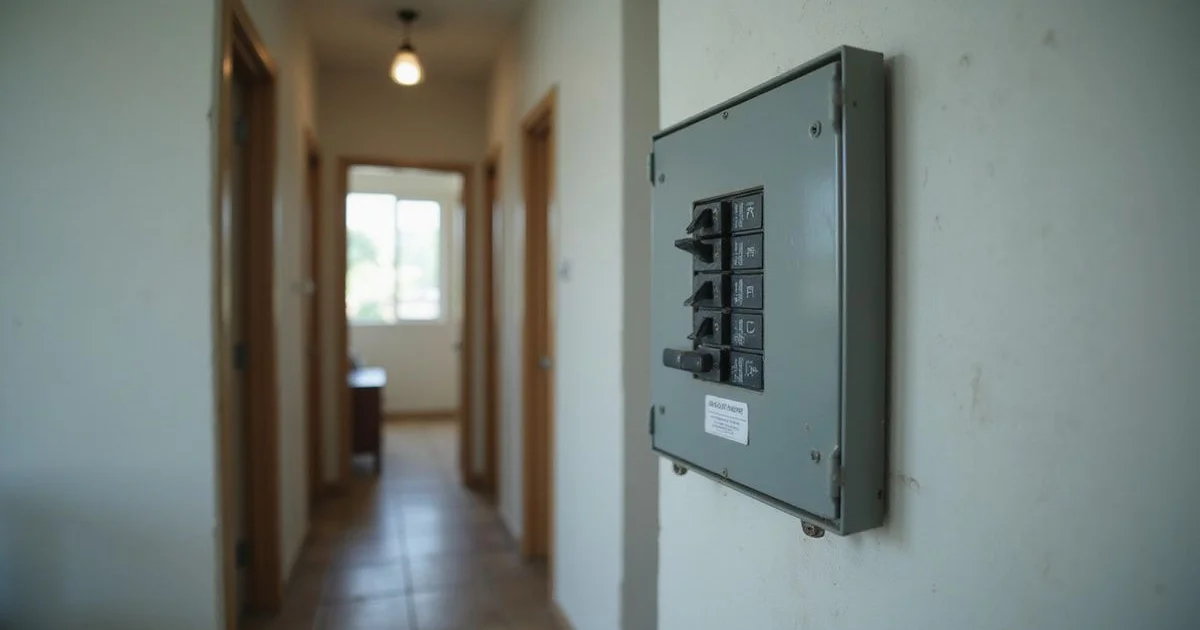
A trip is a warning, not a nuisance
You switch on the water heater, and a moment later the power goes off. Or it trips halfway through a shower. A water heater that keeps tripping the breaker is one of the most common heater problems in Malaysian homes, and it should always be taken seriously. The breaker is doing its job: it has detected something unsafe. This guide explains the usual causes, what to do now, and who should fix it. It is part of the Water Heaters section.
What the breaker is protecting you from
Most homes have an earth leakage device on their distribution board, called an ELCB (earth leakage circuit breaker) or RCCB (residual current circuit breaker). It watches for electricity leaking out of a circuit, for example through water or through a person. When it detects leakage, it cuts the power in a fraction of a second.
A water heater combines electricity and water in a wet room. That is why a heater fault often shows up as an RCCB or ELCB trip.
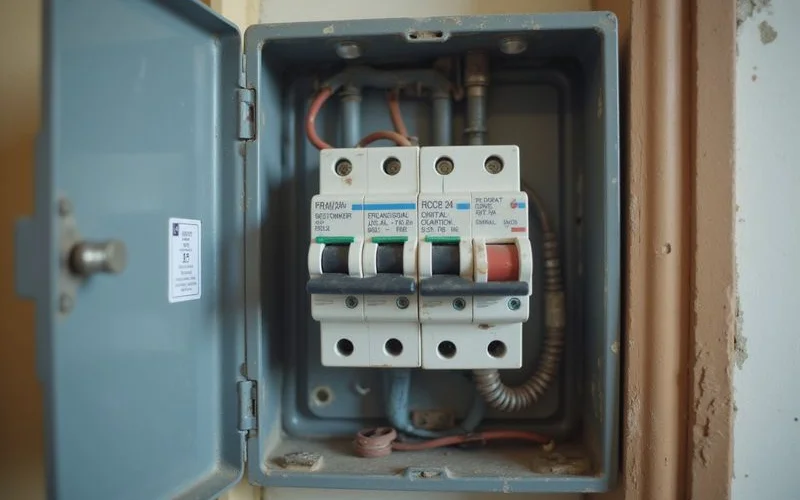
Common causes
Heating element fault
The element is the part that heats the water. Over time it can corrode or crack, letting current leak into the water or the casing. This is one of the most common causes, especially in older heaters or in areas with hard or dirty water.
Moisture getting in
Water inside the heater’s casing, terminal box or switch can cause tripping. It may come from:
- A leaking pipe joint above or near the heater
- A cracked or perished seal inside the heater
- Steam and splashing in a poorly ventilated bathroom
- Rain getting into an outdoor or poorly placed switch
Wiring problems
Loose, damaged or poorly connected wiring at the heater, the switch or the circuit can cause trips. Heat and moisture over the years make these faults more likely. Heaters fitted without a proper earth or a suitable circuit are a particular risk.
Other faults on the same circuit
Sometimes the heater is not the cause. Another appliance on the same circuit, or a damp socket nearby, can trip the RCCB. If it only trips when the heater is on, the heater is the likely cause.
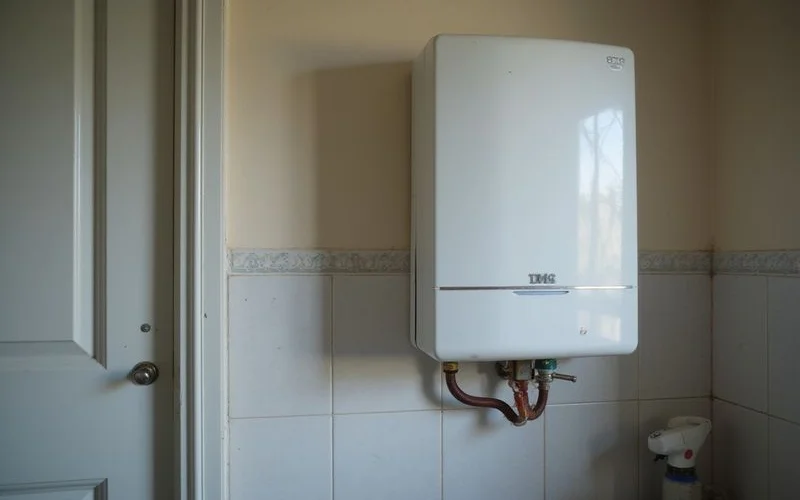
What to do now
- Stop using the heater. Switch it off at its wall switch.
- Do not keep resetting the breaker. One reset to restore power to the rest of the house, with the heater switched off, is fine. If the breaker trips again with the heater off, the fault is elsewhere and you need an electrician.
- Look for water. Without touching the heater, check for drips at the pipes, water on the casing or around the switch. If there is water, keep it switched off.
- Use the other bathroom or a kettle for hot water in the meantime.
- Note what happens. When does it trip? Right away, after a few minutes, only during long showers?
Safety warning
Never open the heater casing, touch wiring or bypass the ELCB or RCCB. Work on heater wiring should be done by a qualified person. If you smell burning or see scorch marks, switch off the heater circuit at the board and leave it off.
Electrician or plumber?
| What you find | Who to call |
|---|---|
| Trips with no sign of water | Qualified electrician |
| Burning smell, scorch marks, hot switch | Qualified electrician |
| Water dripping onto the heater from a pipe joint | Plumber for the leak, then an electrician to check the heater |
| Water leaking from inside the heater | Plumber, plus an electrician to check it is safe |
| Old heater with repeated faults | Consider replacing; see the decision guide |
Our guide on whether you need a plumber or electrician for a water heater fault explains the split in more detail.
Repair or replace?
A tripping heater can often be fixed by replacing the element or a faulty part. But if the heater is old, has tripped before, or has water inside its casing, replacement may be the safer choice. Our guide to repairing or replacing a water heater helps you decide.
Landed house and condo notes
The safety steps are the same for landed houses and condos. In a condo, the distribution board for your unit is inside the unit, so you can switch off the heater circuit yourself. In rented homes, tell the landlord or agent straight away, in writing. A heater is usually the owner’s responsibility unless it was damaged by misuse.
When to call a plumber
Call a qualified electrician first for any heater that trips with no visible water. Call a plumber if water is leaking at or into the heater, and make sure an electrician checks the heater is safe before it is used again. If you are replacing the heater, the plumber can fit the new unit and a qualified person should handle the electrical connection.