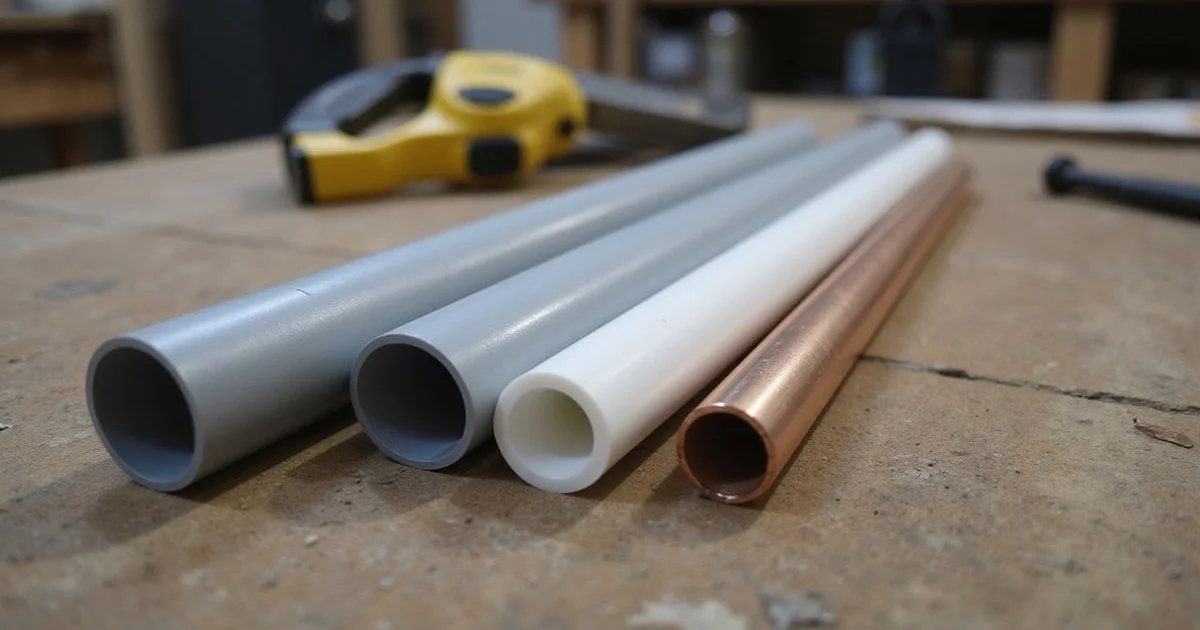
Choosing the right pipe for the job
Most people only think about pipe material once something has already leaked. By then, the plumber is waiting for an answer.
The ppr vs pvc pipe question comes up on almost every repiping job in the Klang Valley. The short version: use PVC for cold water and drains, and PPR or copper for hot water.
The material you pick changes how long the pipe lasts, whether it handles hot water, how the joints are made and what you pay. There is no single best pipe material for a house, only the right one for each line.
This guide covers PVC and uPVC, PPR, copper, polyethylene (PE) and older galvanised iron (GI). It is part of our Pipe Replacement section. We’ll start with a side-by-side table, then go through each material and the hot water rule that matters most.
The comparison ledger
PPR and copper handle hot water. PVC and uPVC suit cold water and drains, PE suits buried supply, and GI is best replaced.
| Material | Typical uses at home | Hot water? | How it is joined | Notes |
|---|---|---|---|---|
| PVC / uPVC | Cold water supply, waste and drain pipes | No, standard PVC is not for hot lines | Solvent cement (glued) | Common, low cost, easy to work |
| PPR | Hot and cold water supply | Yes | Heat fusion | Joints fuse into one piece; needs the right tool |
| Copper | Hot and cold supply, older and higher-end homes | Yes | Soldering or compression fittings | Durable, higher cost, skilled work |
| Polyethylene (PE) | Underground supply, from the meter to the house | Not usually for hot lines | Compression or fusion fittings | Flexible, good for buried runs |
| Galvanised iron (GI) | Older houses, now mostly replaced | Yes, but corrodes | Threaded joints | Rusts from the inside over time |
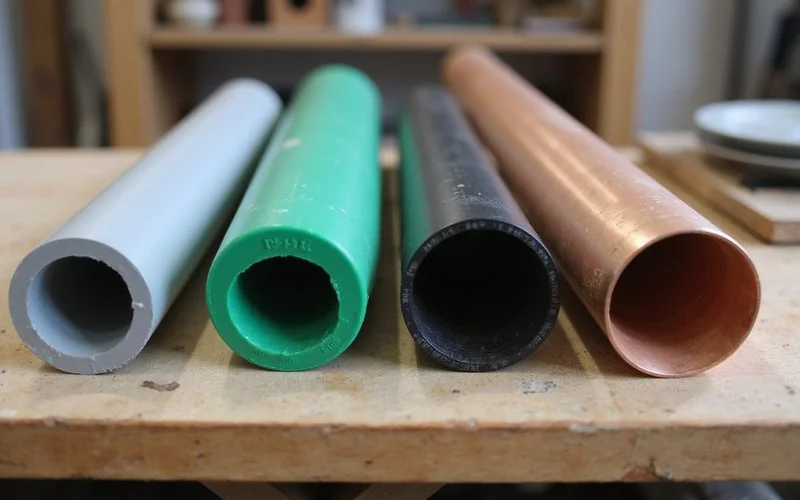
PVC and uPVC
PVC is the most familiar plastic pipe, and it is the sensible choice for cold water and drainage. uPVC (unplasticised PVC) is a stiffer form used for water supply and drains. Both are affordable and easy to install.
- Best for: cold water supply, waste and drain pipes
- Joined by: solvent cement, which needs time to cure before the line is pressurised
- Watch for: weeping joints when a job is rushed and the water goes back on too soon
Limits: standard PVC is not made for hot water. It is usually rated to about 60°C at most, and its pressure rating falls as the water warms. On a hot line it can soften and fail. It can also become brittle in strong sunlight if left exposed without protection.
PPR
PPR (polypropylene random copolymer) is the usual pipe for hot water in newer Malaysian homes, and it also works for cold lines. Manufacturer data typically rates it for continuous use at around 70°C over a 50-year design life, with short peaks up to 95°C. That is a big step above PVC.
Lengths are joined by heat fusion. The pipe end and fitting are heated with a special tool and pushed together, so they melt into a single piece. Properly made, those joints are very reliable.
- Best for: hot and cold supply inside the house
- Joined by: heat fusion, with a proper fusion tool
- Look for: pipe marked to the Malaysian Standard (the MS 2286 series covers polypropylene piping)
Limits: heat fusion needs the right tool and some skill. A poorly fused joint can leak. PPR is also thicker than copper for the same flow.
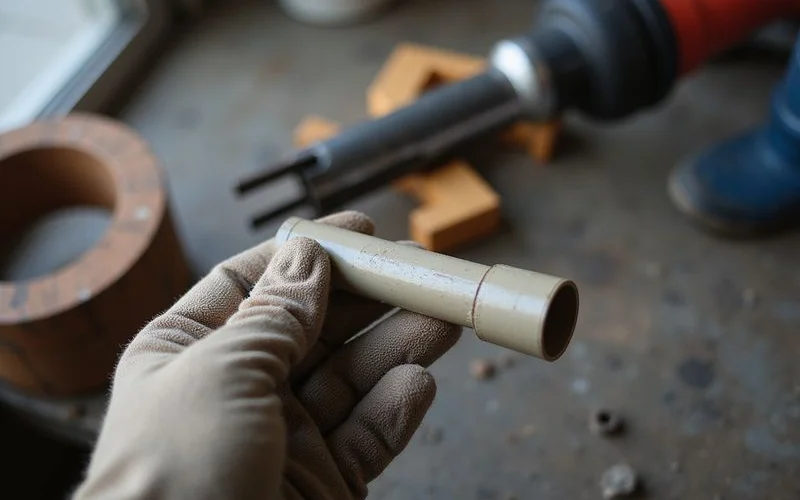
Copper
Copper is the long-lasting metal option for hot and cold water. It handles heat and pressure well and has been used for water pipes for a long time. It also does not degrade in sunlight, so it suits exposed runs.
- Best for: hot lines, exposed pipework, older and higher-end homes
- Joined by: soldering or compression fittings
Limits: it costs more than plastic, needs skilled jointing, and is less common in new homes in the Klang Valley.
Polyethylene (PE)
PE is the pipe for the buried run between the meter and your house. It is flexible and tough, so it bends around obstacles and copes with ground movement.
- Best for: underground supply
- Joined by: compression or fusion fittings
Limits: not usually used for hot water lines inside the house.
Galvanised iron (GI)
GI is old-house pipe, and we would replace it rather than repair it. It is steel coated with zinc. Over decades, the coating wears and the steel rusts from the inside, causing brown water, weak flow and repeat leaks.
- How to spot it: grey metal pipe with threaded joints, often with rust stains at the fittings
- Typical signs of trouble: brown water, falling pressure, leaks that keep coming back
It is rarely used for new work. Our guide on pipe repair or repiping covers what to do with an ageing GI system.
Hot water: the most important rule
Use a material rated for hot water on every line from the water heater. For pipe for hot water in Malaysia, that means PPR or copper. Standard PVC on a hot line is a common cause of hot water pipe leaks.
The numbers explain why. PPR is rated for continuous use at around 70°C, while standard PVC is usually rated to about 60°C at most. Pressure ratings drop as temperature rises, so a joint that is fine on a cold line can fail on a hot one.
If you are not sure what your hot lines are made of, ask a plumber to check.
Mixing materials in one house
Mixed materials are normal. Most older homes end up with a mix, because pipes are repaired and replaced in stages. What matters is the joints between them:
- Use proper transition fittings where plastic meets metal, not improvised connections.
- Do not join hot-rated pipe to a short length of standard PVC on a hot line.
- Ask the plumber to label or photograph where materials change, so future repairs are easier.
Lifespan factors
Material is only part of the story. Pipe life also depends on how the system is installed and run:
- Installation quality, especially joints
- Water pressure, including booster pumps
- Temperature, for hot lines
- Sun exposure for pipes outside
- Ground movement for buried pipes
- Water quality
Cost factors
Labour, access, hacking and making good usually cost more than the pipe itself. Material prices differ, but they are rarely the biggest line on the bill.
Partner price for reference: KL1 Plumber publishes a price of RM65 to RM250 per metre to replace PVC pipe, read from its price list on 15 November 2026. Ask for quotes that name the material and the length of pipe, so you can compare like for like.
Which material for which job?
This table is our best-practice default for a typical Klang Valley home. Your plumber may adjust it for your layout.
| Job | Common choice |
|---|---|
| Cold water supply inside the house | PVC/uPVC or PPR |
| Hot water lines from the heater | PPR or copper |
| Underground supply from the meter | PE |
| Waste and drain pipes | PVC/uPVC |
| Replacing old GI throughout | PPR, often with PE for the underground run |
Landed house and condo notes
Landed house. You choose the material for all pipes after the meter, including the underground supply.
Condo unit. Inside your unit, you choose for in-unit runs. Shared risers are the building’s.
When to call a plumber
Call a plumber when you are repairing, repiping or renovating. Ask which material they recommend for each line, especially hot water, and why. The ppr vs pvc pipe choice should be settled before work starts, not on the day.
Make sure the material is named in the written quote. Ask too whether the pipe is SIRIM-certified, since products used for water work in Malaysia must meet SPAN requirements.
Work on pipes carrying water from the public mains needs a plumber with an IPA Type A permit from SPAN. Get your quotes in writing and compare the materials line by line.