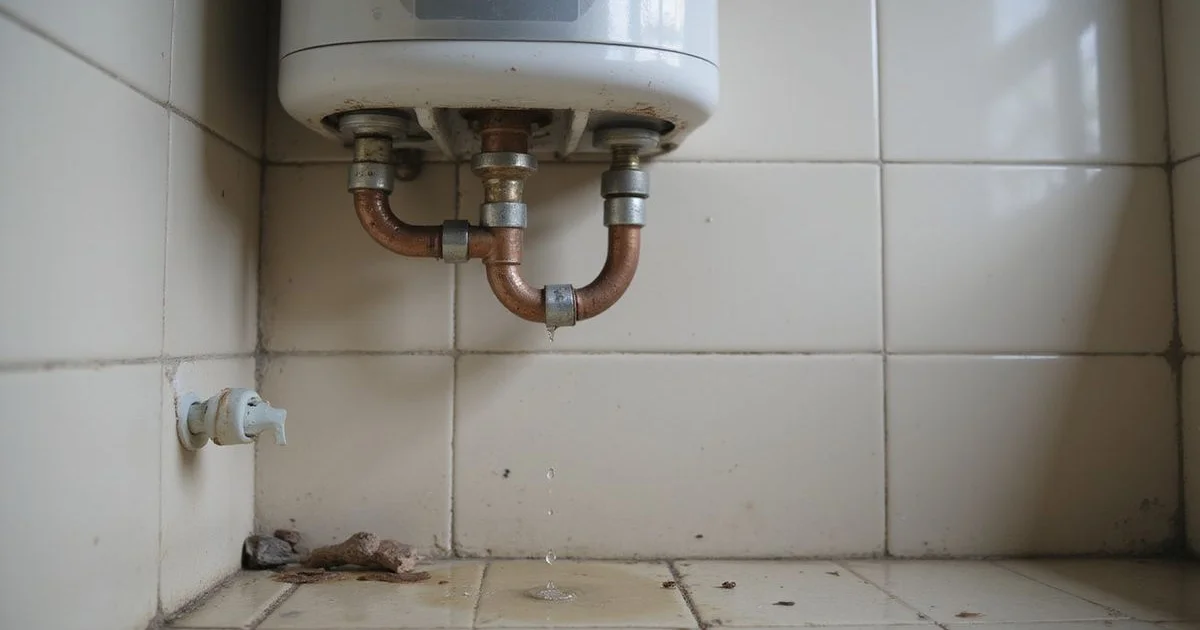
Why hot water lines leak differently
A hot water pipe leak usually starts because heat moves the pipe. Every time you take a hot shower, the pipes and fittings between the heater and the shower heat up and expand, then cool and shrink when you turn off the tap.
Over months and years, that movement works joints loose and wears seals. The first sign is often a drip that only appears when the water is hot.
That’s why a water heater pipe leaking can look harmless at first. It’s a slow problem, but it doesn’t fix itself.
In this guide we cover the causes, how to make the area safe, and what a repair usually involves. It sits in the Pipe Leaks section, alongside guides on other kinds of leaks.
Common causes
Most hot line leaks trace back to one of five things:
- Heat stress on joints and fittings. Repeated heating and cooling loosens threaded joints and compression fittings over time.
- Unsuitable pipe material. Standard PVC is not made for hot water, because it loses strength as the water warms. If someone used it on a hot line, it can soften, sag and crack. PPR, by comparison, is made for hot water and is typically rated for up to 70°C. Our guide comparing PVC, PPR and copper pipes explains which materials suit hot water.
- Worn flexible hoses. Braided hoses connecting the heater to the pipes can perish inside, especially near the heater.
- High pressure. A strong booster pump or high mains pressure puts more strain on hot water joints.
- Poor installation. Joints made without the right sealant or fittings may hold for a while, then fail.
Make it safe first: power, then water
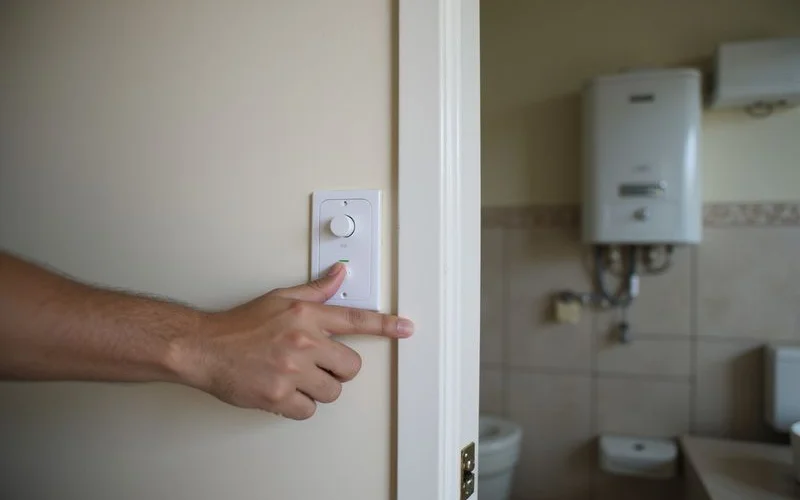
Switch off the power before the water. Water and electricity together are dangerous, so the order matters.
- Switch off the heater at its wall switch. For a storage heater, also switch off its breaker at the distribution board if you can reach it safely without standing in water.
- Then isolate the water. Close the valve on the cold supply going into the heater if there is one. If not, close the stopcock or your unit valve.
- Let the pipes cool before you touch them. Hot water lines can scald.
- Catch the drips and keep water away from sockets and switches.
- Photograph the leak, where it is and how fast it drips.
Those photos help a plumber quote more accurately, and they’re useful if you need to show building management or an insurer later.
If water is coming out of the heater’s casing, around the switch, or the breaker keeps tripping, do not switch it back on. That is a heater fault, not just a pipe leak.
Is it the pipe or the heater itself?
Look at where the water shows up. A wet joint on the pipe is usually a plumbing job, while water inside the casing points to the heater.
| What you see | Likely source | Who to call |
|---|---|---|
| Drip at a joint between the heater and shower | Fitting or joint on the hot line | Plumber |
| Wet braided hose under the heater | Perished connector hose | Plumber |
| Water inside the casing or from the bottom of a storage heater | Heater tank or internal seal | Plumber, and a qualified person to check the heater |
| Breaker trips, burning smell, scorch marks | Electrical fault | Qualified electrician |
If the heater itself is leaking, read the Water Heaters section. A corroded storage tank usually means replacing the heater rather than repairing it.
What a repair usually involves
For hot water line leak repair on an exposed pipe, the plumber cuts out the failed joint or section and fits a new one. The material and fittings must be rated for hot water. For a concealed pipe in the wall, they may need to open a small area of tiles to reach it. If the leaking section runs inside a wall, Leak Inside a Wall: What the Repair Involves explains the opening-up and making-good steps.
Before the work starts, ask these three things:
- Is the new pipe and every fitting rated for hot water?
- How much of the wall or floor will be opened?
- Who restores the tiles afterwards, and is that in the quote?
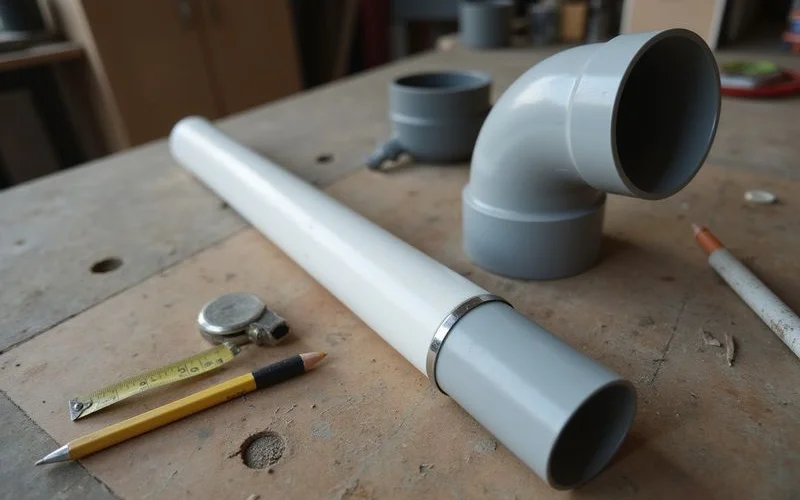
Where an older hot line was run in unsuitable material, a plumber may suggest replacing the whole run from the heater to the shower rather than patching one joint. That costs more at first but avoids repeat leaks.
Partner price for reference: KL1 Plumber publishes a price of RM100 to RM220 to repair a hot water pipe leak, read from its price list on 15 November 2026. Where a job falls in that range depends on access, the pipe material and the parts needed. Leaks inside walls that need hacking are priced differently.
Landed house and condo notes
Landed house. Heaters in landed houses are often fed from the roof tank, sometimes through a booster pump. A pump that pushes high pressure through old hot water joints can speed up wear.
If you have more than one heater and leaks keep appearing on the hot side, ask the plumber to look at the whole system, not just the one joint.
Condo unit. A hot water leak inside a bathroom wall can soak through to the unit next door or the one below before you notice it. If a neighbour reports damp, check your heater pipes first and tell building management.
Work inside your unit is usually your responsibility. Some buildings have house rules about contractor hours and access, so check before you book.
Preventing repeat leaks
Four habits cut down repeat leaks:
- Ask for pipe and fittings rated for hot water on every hot line.
- Replace old braided hoses when you replace a heater.
- If you have a strong booster pump, ask whether a pressure check makes sense.
- Look at the joints under the heater during your yearly check.
When to call a plumber
Call a plumber for any hot water pipe leak you cannot fix by hand-tightening a visible connector, and for any leak in a wall or ceiling. Those are the jobs where a guess costs more than the call-out.
If the heater trips the breaker or has water inside its casing, you need a qualified electrician too. Our guide on whether you need a plumber or electrician for a water heater fault helps you decide.
Switch off the heater, photograph the leak, and book the repair before the drip becomes a stain on the wall.