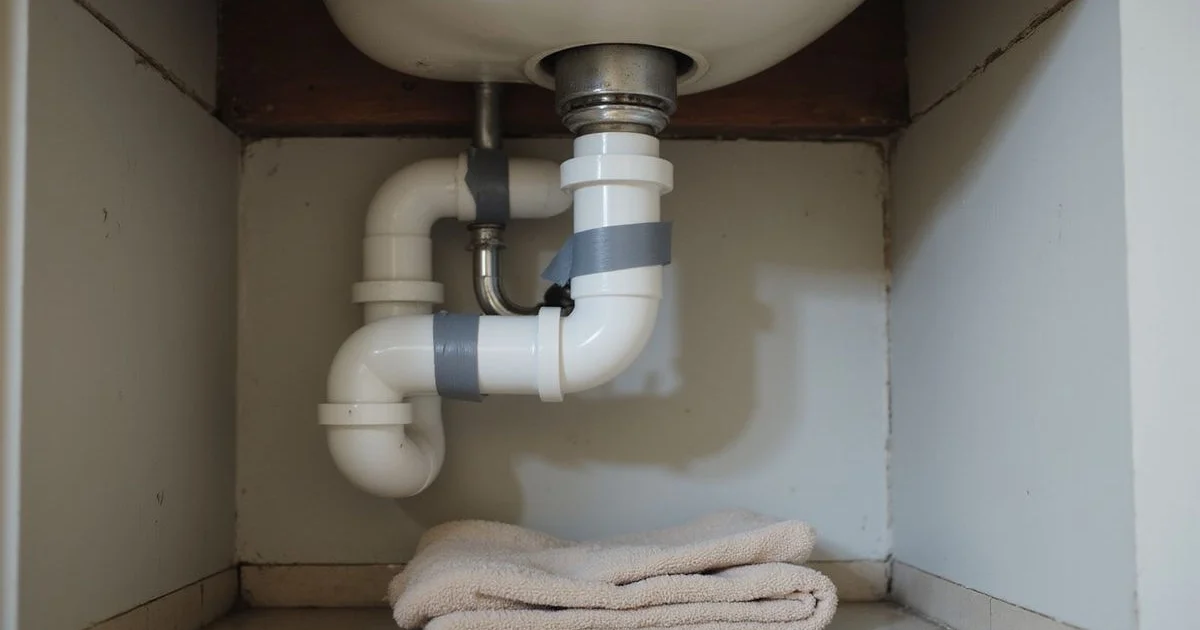
Stop-gaps buy time, they do not fix leaks
When a pipe starts leaking, the first instinct is to make it stop. That is right, but the safest way to stop a leak is almost always to turn off the water, not to wrap something around the pipe. A temporary fix can help you get your water back for a day or two until a proper repair, but only on the right kind of leak. This guide explains which stop-gaps are safe to try, their limits, and what not to do. For the bigger picture on leaks, see the Pipe Leaks section.
Step one is always the same: isolate the supply
Before you try any fix, stop the water.
- For one fixture, close the small angle valve under the sink, basin or toilet.
- For the whole house, close the stopcock near the meter, or your unit valve in a condo. Our guide on how to turn off your main water supply shows where to find them.
- If you have a roof tank, close the tank outlet valve too, otherwise stored water keeps feeding the leak.
- Switch off the water heater and booster pump so they do not run dry.
Then open a low tap to let the pressure out of the pipes. A pipe with no pressure is much easier, and safer, to patch.
Stop-gaps that can work
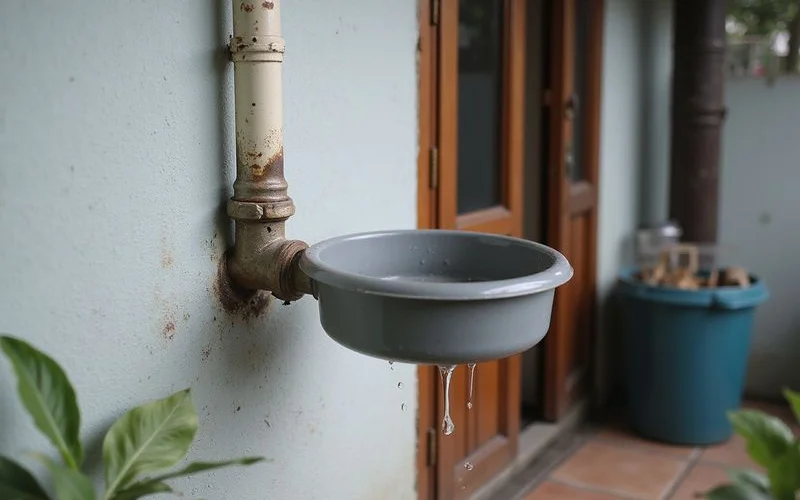
These are for exposed pipes you can see and reach, such as under a sink, along an outside wall or in a service yard.
Self-fusing repair tape
Silicone tape bonds to itself when stretched and wrapped tightly. It works best on small pinhole leaks and weeping joints on straight sections of pipe.
- Dry the pipe and clean off dirt.
- Start a few centimetres before the leak.
- Stretch the tape as you wrap, overlapping each turn by half.
- Finish a few centimetres past the leak.
Ordinary insulating tape or cloth tape will not hold water under pressure.
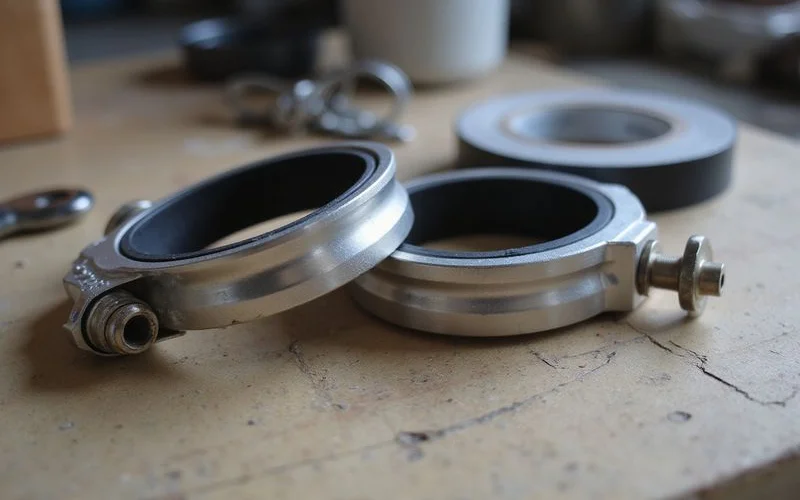
Pipe repair clamp
A clamp is a metal band with a rubber lining that bolts around the pipe over the leak. It holds better than tape on a split or a hole, as long as the clamp is the right size for the pipe.
Tightening a loose connector
If water is weeping from a compression nut or a flexible hose connection, a gentle quarter-turn may stop it. Do not overtighten. Plastic fittings crack easily.
Know the limits
| Stop-gap | Works on | Does not work on | Rough lifespan |
|---|---|---|---|
| Self-fusing tape | Pinholes, weeping joints on straight pipe | Bends, burst pipes, hot lines over time | Days to a few weeks |
| Repair clamp | Splits and holes on straight pipe | Joints, bends, wrong-sized pipe | Until a proper repair |
| Epoxy putty | Small leaks on dry, depressurised pipe | Pipes under pressure, wet surfaces | Uncertain, treat as temporary |
| Tightening | Loose visible connectors | Cracked fittings, worn seals | Can be permanent if it was only loose |
Temporary means temporary
Every stop-gap here is a way to get through a day or two. The pipe or fitting that failed is still weak, and the one next to it may be just as old.
What not to try
- Do not try to seal a concealed pipe by plastering or painting over a damp patch. The leak keeps going behind it. Leak Inside a Wall: What the Repair Involves explains the proper fix.
- Do not glue a pressurised line. PVC solvent cement needs a dry pipe and time to set. Gluing under pressure does not hold.
- Do not use heat on plastic pipes to “melt” a hole shut.
- Do not work near live electrics. If water is near sockets or the heater, switch off the power at the board first, if it is safe to reach.
- Do not touch the Air Selangor side of the meter. Report leaks there to Air Selangor.
Keep water away from electrics and floors
While you wait for the repair, put a basin or bucket under the leak, lay towels to stop water spreading and move anything that can be damaged. In a condo, wipe up standing water quickly so it does not seep into the floor and reach the unit below.
When to call a plumber
Call a plumber for a proper repair even if your stop-gap works, because the pipe is still damaged. Call straight away if the leak is inside a wall, under a floor, on a hot water line, or if it keeps leaking after you have isolated it. Ask for the repair to be done with the right material for the line, and get the price and scope in writing before work starts.