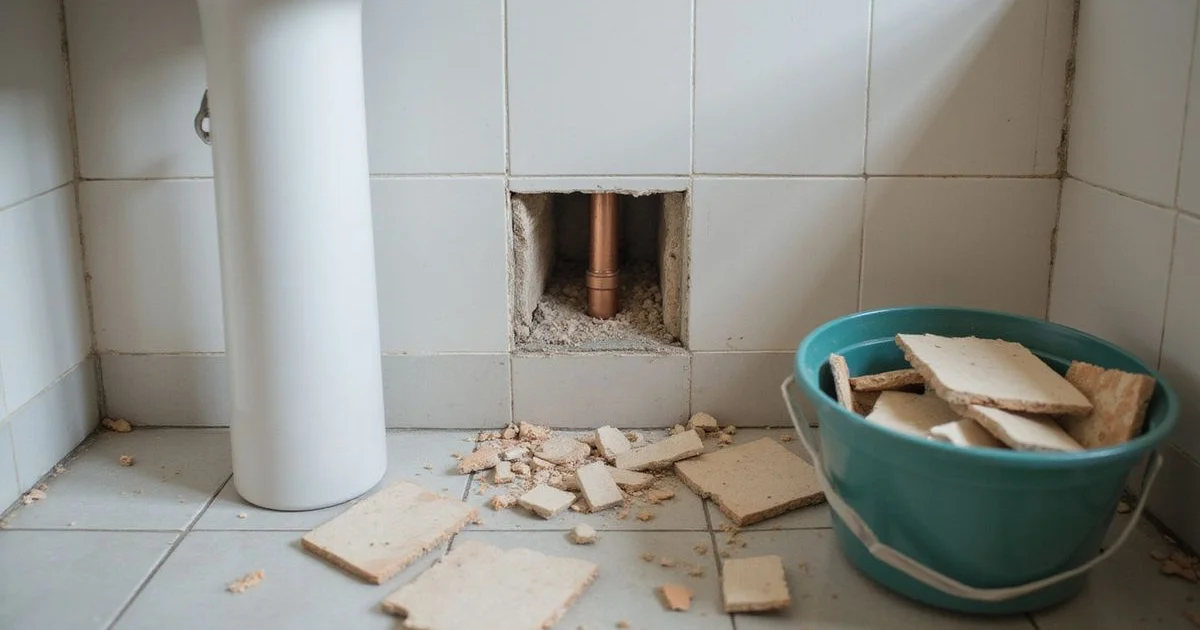
What happens once a leak is confirmed
Most homeowners expect the worst once a leak is confirmed inside a wall. The job is often smaller than that.
You’ve run the meter test, the meter moves with everything closed, and there’s damp on a wall or floor. So the leak is real and it’s inside the wall.
Here’s what we want you to know before you call anyone: a good leak inside wall repair opens as little as possible. We’ll cover how concealed pipes are found, what hacking and making good involve, how long it takes and how pricing works.
This page builds on our Pipe Leaks section. If you haven’t confirmed the leak yet, start with Hidden Leak in a Wall or Floor: Signs to Look For.
Step 1: finding the leak
Plumbers find the spot by combining several methods, then open only the area the evidence points to. Not every plumber offers every method, so ask which ones yours uses.
| Method | How it works | What it tells you |
|---|---|---|
| Visual and meter checks | Reading damp patterns and isolating sections of pipe | Which branch is leaking |
| Pressure test | Sealing a section of pipe and watching a gauge for a pressure drop | Whether that section leaks |
| Thermal imaging | A camera that shows temperature differences behind surfaces | Useful for hot water leaks and wet areas |
| Acoustic detection | Listening equipment that picks up the sound of escaping water | Can narrow down the spot on some pipes |
| Exploratory hacking | Opening a small area where the evidence points | Confirms the exact location |
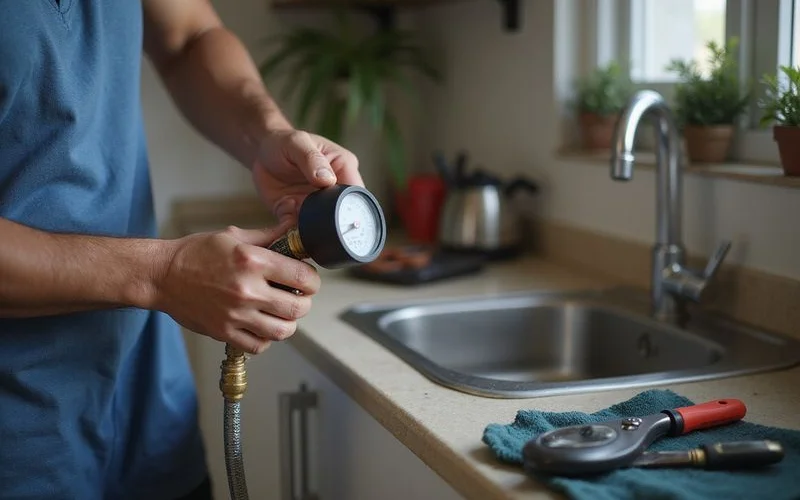
Acoustic listening works best when the pipes are under pressure and the house is quiet. Switch off the TV, the washing machine and the air-conditioning before the plumber arrives.
About the partner plumber
The handbook’s partner plumber does not offer leak detection without hacking, and it does not offer hydro jetting. The methods above are explained so you understand the options. Ask any plumber you contact which methods they use.
Step 2: hacking, repair and making good
Concealed pipe leak repair follows five steps once the location is known. Hacking the wall to fix the leak is only step two, and the opening should stay small.
- Protect the area. Cover floors and furniture. Dust from hacking spreads further than you expect.
- Open the wall or floor. The plumber removes tiles and plaster or screed over the leak. A small, neat opening is the goal.
- Repair the pipe. A damaged section is cut out and replaced with new pipe and fittings. If the pipe is old and brittle, a longer section may need replacing.
- Pressure test. The water goes back on and the repair is checked before anything is closed up.
- Make good. The opening is filled, plastered and tiled or painted.
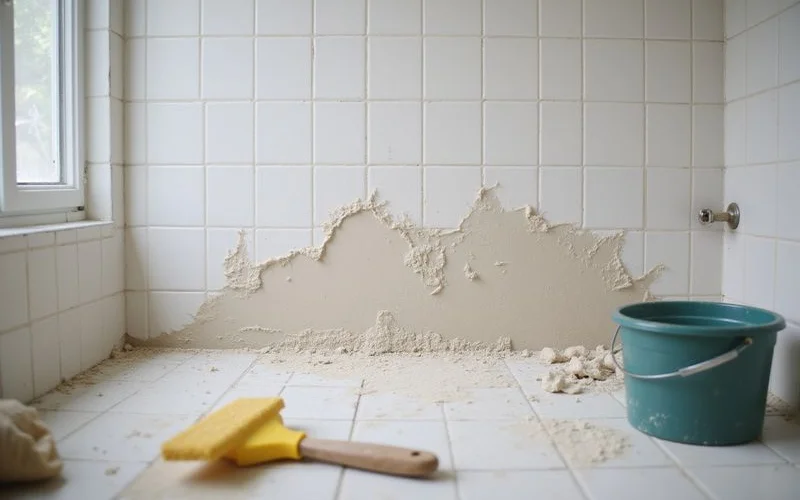
Making good is where quotes often differ. Some include closing up and re-tiling. Others stop at the pipe repair and leave the finishing to you or a separate contractor.
Finding matching tiles in an older house can be hard. Keep any spare tiles you have.
Rerouting instead of repairing in place
Rerouting means abandoning the old pipe and running a new one on a different path. A plumber may suggest it when a concealed pipe is old and has leaked before.
The new pipe can run inside a fresh channel or along the surface, boxed in or left exposed. Exposed routing means less hacking now and easier access later. The Pipe Replacement section covers when it makes sense to replace more than one length of pipe.
Disruption and time
Most of the time goes on finding the leak and waiting for plaster and adhesive to set, not on the pipe itself. A small repair can be quick, while a long run of tiling takes longer.
How long it takes depends on:
- How quickly the leak is pinpointed
- How much tiling or screed needs to come up
- Whether the pipe can be repaired in place or must be rerouted
- How long plaster and tile adhesive need to set before the area is used
A bathroom or kitchen may be out of use for part of the job. Water to the house may be off while the pipe is being cut and joined. Ask the plumber to tell you in advance.
What it costs and why
A concealed leak costs more than an exposed one, because of the time to find it and the work to open and close the wall. As a reference point, KL1 Plumber publishes a starting price “from RM500” for a leak inside walls, read from its price list on 15 November 2026. Treat that as a starting point, not a fixed price.
What changes the cost:
- How long it takes to locate the leak
- The size of the opening and the floor or wall finish
- Whether making good and re-tiling are included
- The length of pipe replaced and the material
- Access, such as working behind built-in cabinets
Making good is the line item that moves a quote most, so check it first. Ask for a written quote that lists each part. Our guide on what a written plumbing quote should include has a checklist.
Landed house and condo notes
Landed house. Pipes after the meter are your responsibility, so you arrange the repair. If the leak is on the underground line from the meter to the house, the plumber may need to dig up part of the porch or driveway.
Condo unit. Work inside your unit is usually yours to arrange, but check your building’s house rules on hacking, noise hours and contractor access. If the leak has reached the unit below, building management may need to inspect it. The Condo and Strata Leaks section explains that process.
How to prepare for the visit
A little preparation saves time on the day and keeps the opening smaller. These five jobs take under an hour.
- Gather your evidence. Meter readings with times, dated photos of the damp, and notes on when it gets worse.
- Clear the area. Empty cabinets near the damp wall and move furniture away. If a built-in cabinet is in the way, ask whether it needs to come out.
- Find spare tiles. Check the storeroom for tiles left over from the original build or the last renovation.
- Know where your valves are. The plumber will need to shut off the water. Our guide on how to turn off your main water supply helps.
- Plan for no water. Store some water for drinking and flushing in case the supply is off for a few hours.
Questions to ask before work starts
Seven questions will tell you most of what you need to know about a plumber’s approach. Put them to each plumber you speak to, and compare the answers side by side.
- How will you find the exact spot, and what happens if the first opening is in the wrong place?
- Roughly how big will the opening be?
- Will you repair the pipe in place, or reroute it?
- What pipe material and fittings will you use?
- Is making good included, and does that cover plastering, tiling and painting?
- How long will the water be off, and how long until the area can be used?
- What warranty do you give on the repair, and is it in writing?
When to call a plumber
Call a plumber as soon as the meter test confirms a leak and you can see damp in a wall or floor. Waiting lets the water spread, and that makes the leak inside wall repair bigger and dearer.
Before they start, agree how they’ll locate the leak, how big the opening may be, whether making good is included, and the warranty on the repair. Work on pipes carrying water from the public mains needs a plumber with an IPA Type A permit from SPAN. Under the Water Services Industry Act 2006 permit rules, Type A1 covers work after the meter point and internal piping, and Type A2 adds communication pipes, so ask to see the permit.
Ready to book? Send your meter readings and photos of the damp when you get in touch, and we’ll point you to the right next step.