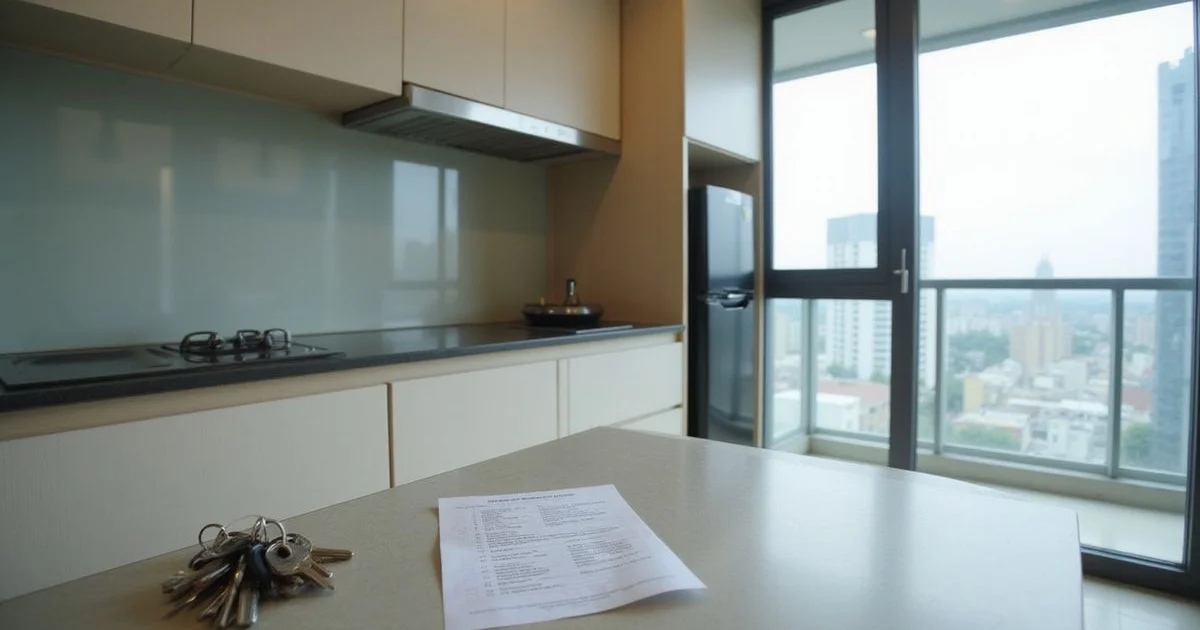
Most landlord plumbing checklists start too late, after the new tenant has already found the drip. The empty days between tenants are your best window. Nobody’s using the water, you can test everything, and any fault clearly isn’t the new tenant’s doing.
We write KL Plumbing Handbook for homeowners across Kuala Lumpur and the Klang Valley. A proper rental handover plumbing check stops arguments about who caused what. It also catches small faults before they turn into big repair bills.
In Malaysia this matters more than people expect. According to SPEEDHOME’s 2026 landlord guidance, there’s no Residential Tenancy Act in force, so your tenancy agreement and your records carry the weight.
Below is our practical move out plumbing check, in the order we’d walk through a landed house. It’s part of our Landlords and Tenants section.
1. Meter leak test
Start at the water meter. Close every tap and appliance, note the reading, wait at least an hour (a few hours is better), then read it again. If it moved, there’s a leak somewhere after the meter.
Look for the small red leak indicator on the meter face. If it keeps turning while everything is shut, water is escaping. Air Selangor looks after the pipe up to your meter, but the pipes after it are the owner’s job. Fix the leak before the new tenant moves in, or it will show up as their high bill.
Our guide to the yearly home plumbing checklist explains the meter test in more detail, along with other routine checks.
2. Taps and mixers
Turn every tap fully on and off. A tap that needs force to close is already wearing out, so it’s worth replacing the washer or cartridge now.
- Check that each tap closes without force.
- Look for drips from the spout and around the base.
- Check bidet sprays for drips at the hose and head.
- Clean aerators if the flow is weak.
A weak flow at one tap is often just a clogged aerator. Weak flow at every tap points to a bigger problem, so test the pressure at a few points before you decide.
3. Traps and drains
Run water in every sink, basin and shower and see how fast it drains. Slow drains are much easier to clear while the house is empty.
- Pour water into every floor trap, especially in rooms nobody used, to restore the water seal.
- Lift floor trap covers and clear hair and debris.
- Check under sinks for drips and damp cabinet boards.
A dry floor trap lets drain smells into the room. That’s one of the most common complaints in a house that’s been empty for a few weeks, and a jug of water fixes it in seconds.
4. Toilets and cisterns
Flush each toilet. It should flush strongly and refill properly, and the cistern should go quiet once it’s full. A toilet in good order at handover also makes it easier to settle a later blocked toilet in a rental: landlord or tenant pays? question.
- Listen for a cistern that keeps running after it fills.
- Add food colouring to the cistern and check the bowl after 15 minutes for a silent leak.
- Check the base for damp.
- Make sure the toilet doesn’t rock.
Coloured water in the bowl means the flap valve isn’t sealing. Silent leaks like this waste water all day with no sound, and they’re easy to miss without the dye.
5. Water heater safety
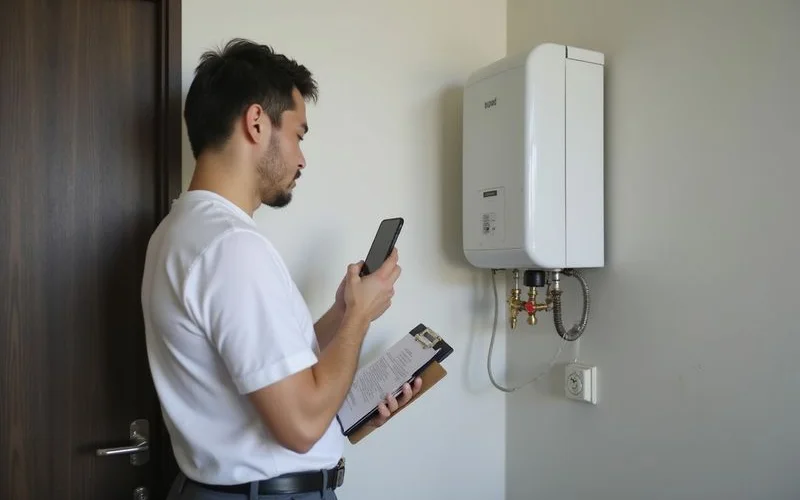
Switch on each heater and check that it heats. Then watch the breaker, because it shouldn’t trip.
- Look for drips at the pipe joints.
- Look for water or rust on the casing.
- Check the switch is in good condition.
If a heater trips the breaker, switch it off and have a qualified person check it before the tenant moves in. Our guide to a water heater that keeps tripping the breaker explains why.
6. Tank condition (landed houses)
If your property has a roof tank, check it now, but only if you can reach it safely. Tanks are easy to forget, and they quietly collect sediment and algae.
- Look for rust, cracks and damp under the tank.
- Check the lid fits.
- Look at the water for sediment or algae.
- Check that the overflow pipe outside isn’t dripping.
In condos, tanks are building management’s responsibility.
7. Ceilings and walls
Look for stains, peeling paint or mould, especially below bathrooms and near the roof. A brown ring on a ceiling usually means water has been getting through for a while.
- Check the ceiling under every upstairs bathroom.
- Check walls beside shower areas and behind the kitchen sink.
- Photograph anything you find.
8. Valves and the main supply
Find the stopcock or unit valve and test it. It should turn and shut off the water.
- Check that angle valves under sinks and toilets close properly.
- Note where each valve is, so you can show the new tenant.
A tenant who knows where to turn off the water can stop a small leak from becoming a flood. Our guide on how to turn off your main water supply is worth sharing at handover.
9. The photo record
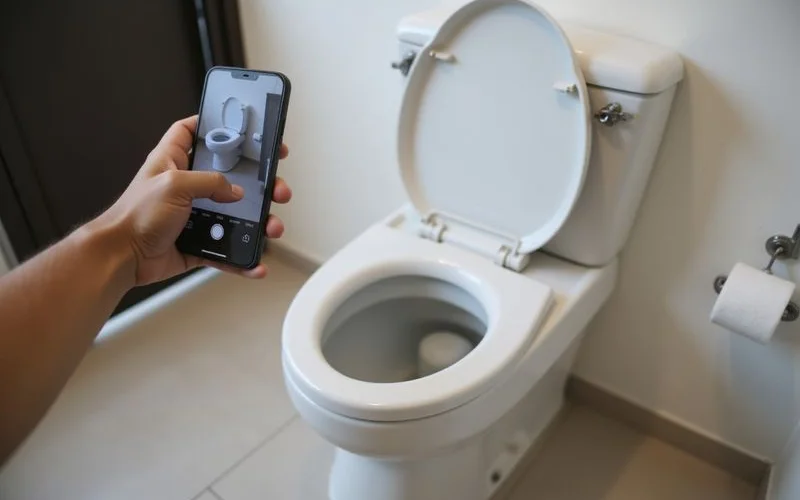
This is the step that prevents disputes. SPEEDHOME’s guidance on Malaysian tenancies says move-in photos are often the most decisive evidence at move-out, and that photos work best attached to the tenancy agreement as an annexure.
Take clear, dated photos of:
- The meter reading
- Every tap, sink, toilet and floor trap
- Each water heater and its switch
- Ceilings below bathrooms and near the roof
- The roof tank, if accessible
- Any existing damage, with something in the shot for scale
Share the photos with the incoming tenant and attach them to the inventory. Ask the tenant to report any problems they notice in the first week, in writing.
Handover checklist summary
Print this table and tick it off as you go. It covers each landlord plumbing checklist item from above.
| Item | Check | Done |
|---|---|---|
| Meter test | No movement with everything closed | |
| Taps and mixers | Close fully, no drips | |
| Sinks and showers | Drain quickly | |
| Floor traps | Topped up and clean | |
| Toilets | Flush, refill, no silent leak, base dry | |
| Water heaters | Heat, no trip, no drips | |
| Tank (landed) | No leaks, lid on, water clear | |
| Ceilings | No stains | |
| Photo record | Taken and shared |
When to call a plumber
Call a plumber before the new tenant moves in if you find any of these:
- A leak
- A running cistern you can’t fix
- A slow drain that won’t clear
- Any heater fault
Repairs between tenants are faster, easier to arrange, and clearly the owner’s responsibility. Keep the receipts with your photo record.
If your meter test or toilet dye test turns up something you can’t fix, book a plumber this week, while the house is still empty. Then finish the rest of this landlord plumbing checklist and hand over with confidence.