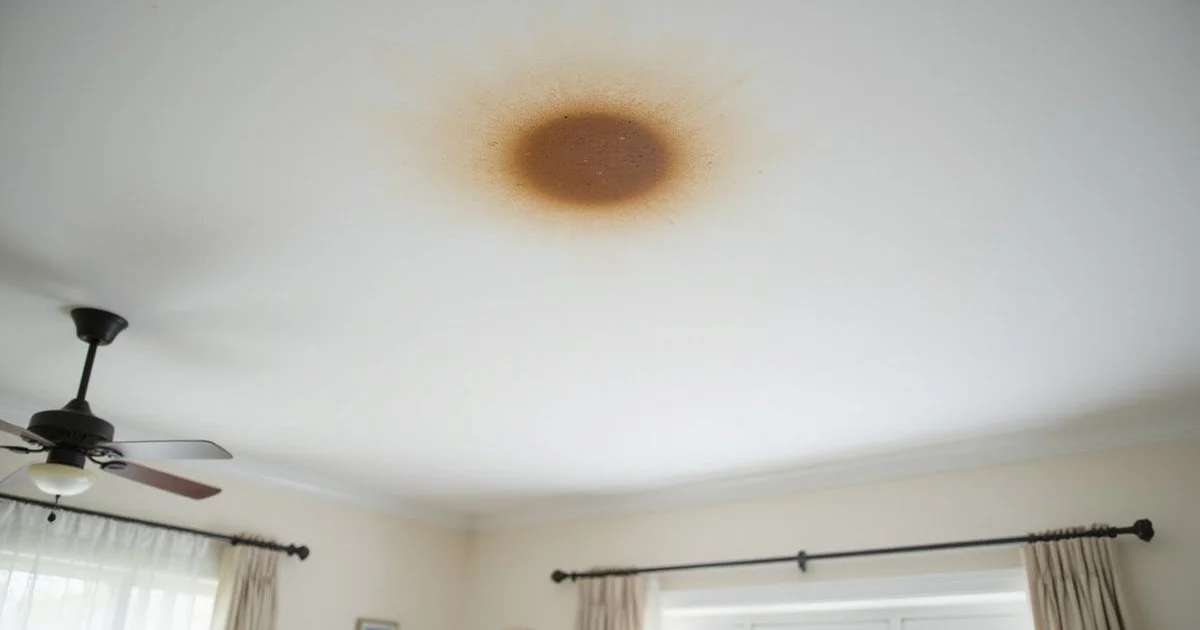
Where is the water coming from?
A brown stain on the ceiling is one of the most common problems in Klang Valley homes. The hard part is working out where the water comes from. It could be rain getting in through the roof or a balcony, or it could be a leaking pipe, tank or bathroom above. The fix, and sometimes who pays, depends entirely on the source. This guide gives you a simple way to tell them apart. It is part of the Roof Leaks and Waterproofing section.
Clue 1: does it follow the rain?
This is the most useful test.
| Pattern | Points to |
|---|---|
| Appears or grows after heavy rain, dries in dry spells | Roof, gutters, flashing, windows, balcony or flat roof waterproofing |
| Wet all the time, rain or shine | Supply pipe, tank, or a constant leak above |
| Worse after showers or using a bathroom above | Waste pipe, toilet seal, or bathroom waterproofing |
| Only after the tank refills or the pump runs | Tank, overflow or pump pipes |
Heavy rain through the year in the Klang Valley makes roof leaks, blocked gutters and failed waterproofing frequent causes of ceiling stains.

Clue 2: where is the stain?
- Below a bathroom: a toilet seal, a waste pipe, a supply pipe or failed bathroom waterproofing.
- Below the roof tank: the tank, its fittings or the overflow.
- Near an outside wall or corner: gutters, downpipes, flashing or window seals.
- Under a roof valley or where two roofs meet: a classic roof leak spot.
- Under a balcony or flat roof: failed waterproofing or a blocked balcony drain.
- In the middle of a room with nothing above but roof: roof tiles or sheets.
Clue 3: the meter test
Close every tap and appliance, note the water meter reading, wait a few hours with no water used, and read it again. If the meter moves, water is escaping from a supply pipe or the tank after the meter. Our guide on a high water bill and the meter leak check explains it step by step.
If the meter does not move but the stain is still growing on dry days, look at waste pipes and bathrooms above, which only leak when used.
Clue 4: track it over time
Mark the edge of the stain lightly in pencil, with the date. Check again after rain, after a dry spell and after heavy bathroom use. Within a week or two the pattern usually becomes clear.
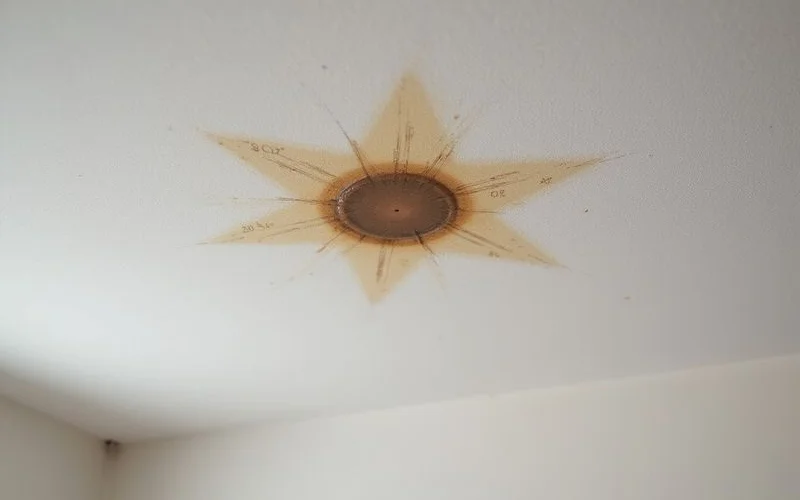
Common roof leak spots in Klang Valley houses
If the stain follows the rain, these are the usual places to look, from the ground or from inside the roof space with safe access:
- Blocked gutters, which overflow and send water back under the roof edge or down the inside of the wall.
- Roof valleys, where two roof slopes meet and water runs together.
- Flashing around walls, chimneys, vents and where the roof meets a higher wall.
- Cracked or slipped roof tiles, often after strong winds or work on the roof.
- Rusted or loose roof sheets and screws on porches and extensions.
- Downpipe joints that leak inside a wall cavity.
- Window frames and sills, where sealant has dried and cracked.
From inside the roof space, look for daylight through tiles, dark wet timber, or water tracks on the underside of the roof after rain.
Next steps by source
Roof, gutters or flashing: clear gutters and downpipes if you can do so safely from the ground or a stable ladder. Do not climb onto the roof. Roof tiles, flashing and roof sheets need a roofer or a contractor who handles roof repairs.
Balcony or flat roof: clear the balcony drain. If water still gets through, the waterproofing membrane may have failed.
Bathroom above: check the toilet base, the floor trap and the grout. Failed bathroom waterproofing is common in older bathrooms. Our guide comparing PU injection and re-waterproofing a bathroom explains the repair options.
Supply pipe or tank: isolate the water if the leak is heavy. Read the Pipe Leaks section or the Water Tanks section.
Condo units
In a condo, a ceiling stain may come from the unit above, from shared pipes, or from the roof if you are on the top floor. Do not try to work it out alone. Report it to building management in writing, with photos and your notes. Inter-floor leaks are inspected under the Strata Management Act 2013 process, and building management issues a Certificate of Inspection (Form 28) naming the cause and the responsible party. The Condo and Strata Leaks section explains how this works.
While you work it out
- Put a bucket under any drip.
- If the ceiling sags or bulges, keep people away and move valuables. A wet ceiling board can fall.
- Switch off power to light fittings in the wet area if water is near them.
- Keep photos and dates. They help whoever fixes it, and in a condo they help the inspection.
When to call a plumber
Call a plumber if the meter test shows a leak, if the stain is below a bathroom or the tank, or if it grows on dry days. For stains that clearly follow the rain, you need a roofer or waterproofing contractor instead. If you cannot tell, a single inspection that checks both the plumbing and the roof saves time.