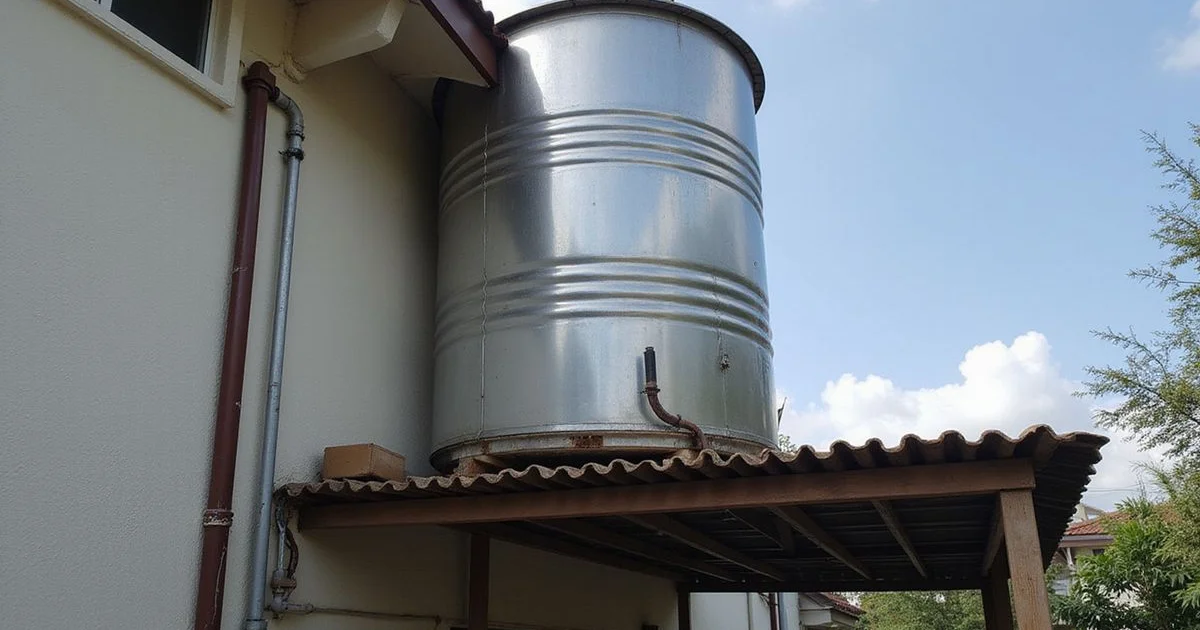
Two common choices for home tanks
Most water tanks in Klang Valley homes are either stainless steel or polyethylene (often called poly or plastic tanks). Both are widely used and both can work well. The right choice depends on where the tank will sit, how much it can weigh, how hot it gets, and your budget. This guide compares the two on the points that matter. It is part of the Water Tanks section. This handbook does not quote tank prices, because the partner plumber does not publish them.
The quick comparison
| Factor | Stainless steel tank | Polyethylene tank |
|---|---|---|
| Material | Stainless steel sheet | Moulded plastic, usually in layers |
| Weight when empty | Usually heavier than poly of the same size | Lighter |
| Durability | Resists impact; can corrode at welds or if poor grade | Does not rust; can crack or degrade if poor quality or exposed |
| Heat | Can get hot in the sun | Can get hot; UV-stabilised types handle sun better |
| Algae | Opaque, less light gets in | Opaque types limit light; translucent ones can grow algae |
| Shape and sizes | Many sizes, often cylindrical | Many sizes and shapes |
| Cleaning | Smooth inside, easy to clean | Smooth inside, easy to clean |
| Typical location | Roof space, stand, outdoor | Roof space, stand, outdoor |
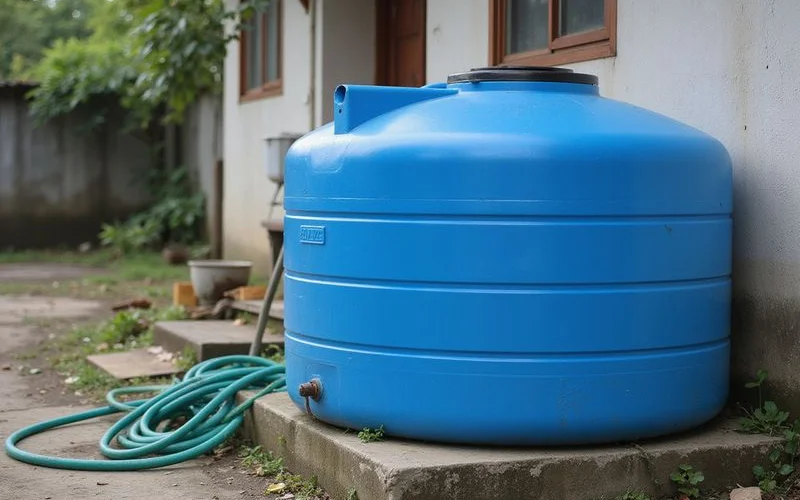
Durability
Stainless steel resists knocks and lasts well if it is a good grade and well made. Weak spots are usually the welds and fittings, where corrosion can start, especially with poor-quality steel or harsh water.
Polyethylene does not rust. Good tanks are made with UV-resistant outer layers and a food-safe inner layer. Poor-quality tanks can become brittle in strong sun over time, and fittings can crack if overtightened.
In both cases, the quality of the specific tank matters more than the material. Compare warranties.
Weight on the roof structure
Water is heavy. A full tank weighs roughly one kilogram per litre of water, plus the tank itself. A large tank holds a lot of weight on one spot.
- In a roof space, the tank must sit on a proper platform over strong supports, not on ceiling boards or thin rafters.
- On a stand, the stand must be rated for the full weight and fixed to a solid base.
- Changing to a larger tank may need a stronger platform.
Poly tanks are lighter when empty, which makes installation easier, but the water inside weighs the same. Ask the installer to check the support for the full weight.
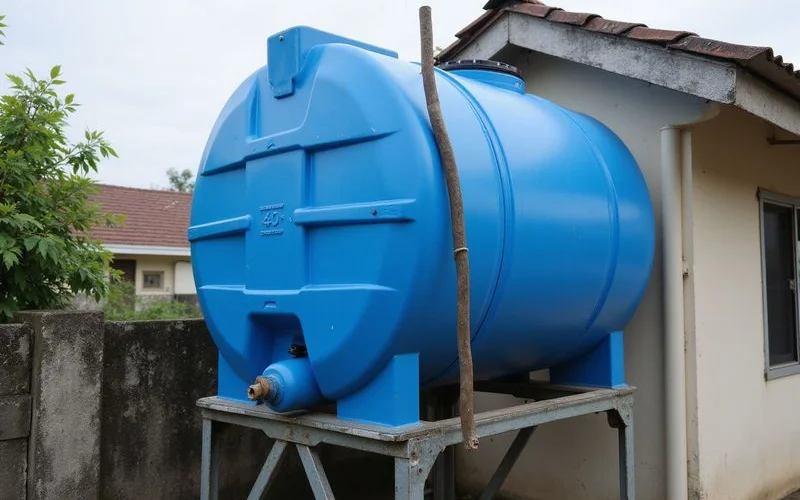
Algae and heat
Algae needs light and warmth. Tanks that let light in, or sit in direct sun with poorly fitting lids, are more likely to grow algae. Signs include green or slimy water, a smell, and particles at the taps.
To reduce it:
- Choose an opaque tank.
- Keep the lid closed and well fitting.
- Shade the tank from direct sun where possible.
- Clean the tank when you see sediment or growth.
Sizing for your household and water cuts
Tank size is about more than daily use. In the Klang Valley, water cuts for scheduled maintenance and burst mains are common, so many households want enough stored water to last through a cut.
Things to think about:
- How many people live in the home?
- How much water do you use each day? Our Household Water Use Estimator gives a rough figure.
- How long do you want stored water to last?
- Can the roof or stand carry the weight of a bigger tank?
- Does a bigger tank still get used up and refreshed often enough to stay fresh?
Our guide to a water cut in the Klang Valley covers storage habits.
Installation details that matter as much as material
A good tank badly installed will give trouble whichever material you choose. Whatever you buy, check that the installation includes:
- A level, solid platform or stand sized for the full weight.
- A float valve that suits your mains pressure and shuts off cleanly.
- An overflow pipe that runs outside the house, not into the roof space.
- An outlet valve so the tank can be isolated for cleaning or repairs.
- A well-fitting lid to keep out light, dust, insects and small animals.
- Safe access for future cleaning and inspection.
- Correctly tightened fittings, especially on poly tanks, where overtightening can crack the moulding.
Cost factors
This handbook does not quote tank prices. What changes the cost:
- Material, brand and quality
- Size
- Removing and disposing of the old tank
- Access to the roof space or stand
- Platform or stand work
- New float valve, fittings and pipes
For replacing a tank, the partner’s published price range is in the Water Tanks section, with its source and date.
Which suits your home?
| Situation | Leans towards |
|---|---|
| Limited roof support, need a lighter tank to lift in | Polyethylene |
| Tank in direct sun outdoors | UV-stabilised poly or good-grade stainless steel, shaded |
| Worried about rust at welds | Good-quality poly |
| Want strong impact resistance | Stainless steel |
| Tight access through a small roof hatch | Check sizes and shapes; some poly tanks are easier to manoeuvre |
Condo units
In condos and apartments, the main water tanks are shared and managed by building management. Owners do not usually choose them. This guide is mainly for landed houses.
When to call a plumber
Call a plumber to check your tank, its support and its fittings before you choose a replacement, and to install the new tank with a float valve, overflow and outlet valve. Ask for the tank brand, size and warranty in the written quote. If you are not yet sure whether to replace, read Water Tank Repair or Replacement?.